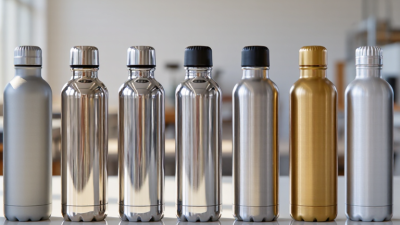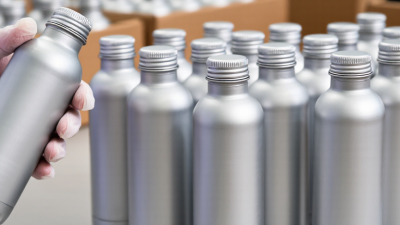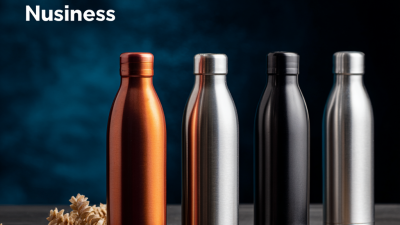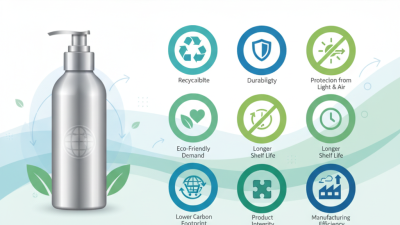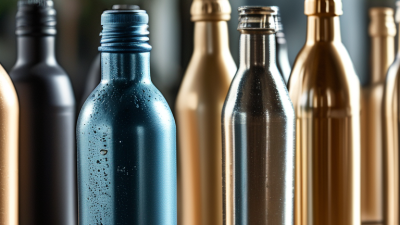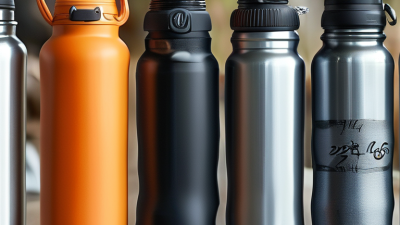
Choosing aluminum bottles for your business is more than selecting a shape or color. The package must suit the product, filling process, shipping route, and customer’s daily use. A 250-milliliter bottle may fit a travel-size offer, while a wider opening can make pouring easier. But capacity alone rarely settles the choice. Check the closure, neck finish, wall strength, decoration options, and any interior coating. Product compatibility matters. A beverage, personal-care formula, or household liquid may need different material and liner checks. Ask suppliers for specifications and samples, then test them with your actual formula and filling conditions. A sample that looks right on a desk can leak after rough handling.
Cost needs the same practical attention. Compare unit price with minimum order quantities, tooling, printing, freight, storage, and expected breakage. A custom color may look distinctive, yet it can add cost or limit reorder flexibility. Small details count. Check whether caps seal consistently, labels adhere to the bottle’s surface, and cartons protect shoulders and bases. For products with specific safety or quality requirements, confirm current documentation with qualified suppliers and relevant experts. Do not rely on a catalog image alone. There is no universally best option, and early estimates can be wrong. That is worth admitting. The right choice comes from balancing product fit, brand presentation, reliable supply, and realistic testing before committing to volume. This guide will help you compare those factors, spot questions worth asking, and choose aluminum bottles with clearer expectations.

Before comparing aluminum bottles, define what your business needs them to do. A bottle for a conference giveaway faces different demands from one used daily in a café. Note the product volume, expected refill frequency, and where customers will carry it. A 500-milliliter bottle may suit a commuter’s bag, while a larger size could feel awkward at a small desk. Check the opening, too. A wide mouth is easier to clean and fill with ice; a narrow neck may be more comfortable for sipping. Small details matter.
Consider what the bottle will hold and how it will be used. Drinks with distinctive flavors may need a suitable interior lining to help protect taste and product quality. Ask suppliers for material and compatibility information, then test samples with the actual contents and cleaning routine. Don’t assume every lining performs the same. Think about daily handling as well: repeated use, drops, and tight packing can expose dents or wear that a showroom sample won’t show. Labels and printed graphics also need to suit the bottle’s finish and your storage conditions. A small trial run can reveal useful surprises, though it may not reflect every customer’s habits. That limitation is easy to miss.
Aluminum bottles are valued for their low weight, durability, and clean, metallic appearance. Many use formed aluminum bodies, but alloy and wall thickness vary by supplier. A thicker wall may resist dents better, while adding weight and cost. The best choice depends on how bottles will be filled, shipped, and handled. I still treat a specification sheet as a starting point, not proof of performance.
Inspect the bottle’s construction closely. Check the base, shoulder, and neck for consistent shaping, smooth edges, and visible dents or wrinkles. The neck finish must match the intended closure, and the cap should seal evenly without excessive force. Interior coatings can help separate certain contents from bare aluminum, but compatibility depends on the formula, storage time, and temperature. Request testing with your actual product; a short trial may reveal issues that a sample inspection misses.
Tips: Ask suppliers for alloy, thickness, coating, and closure details. Fill sample bottles and check for leaks, odor changes, or coating damage over time. Compare units from different production batches when possible. Small flaws matter. A slightly uneven finish may not affect every use, but it deserves a closer look before a large order.
Capacity should match the real pour, not just the shelf appeal. A 250 ml bottle suits samples or single servings; 500 ml gives more room for everyday use. For larger formats, check filled weight and whether customers can grip the bottle comfortably. Leave enough headspace for filling and expansion, but avoid oversized packaging that raises freight costs. Small details matter. A short pilot run can reveal awkward pouring before a full production order.
Shape affects grip, filling-line stability, label space, and packing efficiency. A straight-sided bottle is usually easier to label and arrange in cartons; curved shoulders may look distinctive but can reduce usable panel area. Closure choice needs equal care: match thread and liner to the liquid, required flow, and expected opening frequency. Test for leaks after transport, not only on a clean bench. European Aluminium reported a 76.1% recycling rate for beverage cans in Europe in 2022. That figure concerns cans, not refillable bottles, but it highlights why businesses should check how the bottle body and closure are sorted locally. The cap may need a different recovery route. Real-world handling is easy to underestimate. Test the complete package with the intended fill, label, and shipping carton before confirming specifications.
Choose aluminum bottles only after matching their liner and closure to the product. Water, acidic drinks, and oily formulas can interact differently with interior coatings. Request food-contact declarations and migration-test results for the exact bottle, not just a similar model. Check that tests reflect your destination market’s requirements. Small detail, big consequence. A generic certificate may not cover a changed coating or cap. Ask how the supplier controls material changes, lot traceability, and defect checks. ISO 9001 can indicate a quality-management system, but it does not certify a bottle as safe for every product.
Customization should preserve performance. Confirm neck dimensions, seal compatibility, coating adhesion, and print durability on production samples. Rub a printed sample with a damp cloth; inspect the rim and threads under bright light. Then test filled bottles through shipping conditions. The International Aluminium Institute’s 2022 analysis estimated that about 71% of aluminum beverage cans were recycled globally, while its recycling guidance notes that recycled aluminum production uses about 95% less energy than primary production. These figures concern cans and aluminum production, not every bottle’s footprint. I would not treat them as proof that a customized bottle is automatically sustainable. Request supplier-specific material, recycled-content, and inspection records, then review a pilot batch before scaling.
| Decision Area | What to Check | Practical Evidence or Benchmark | Why It Matters |
|---|---|---|---|
| Intended product and use | Confirm the bottle is designed for the exact contents, filling process, storage conditions, and expected shelf life. | Provide the supplier with the product type, filling temperature, acidity, alcohol content if relevant, and storage requirements; request written compatibility confirmation. | Compatibility depends on the complete package, including its internal coating, closure, and liner—not just the aluminum body. |
| Food-contact compliance | Check the rules that apply in each intended sales market and whether the interior coating and closure are suitable for the product. | For the United States, ask for applicable food-contact documentation, which may include relevant provisions such as 21 CFR 175.300 for certain resinous or polymeric coatings. In the EU, check the framework requirements in Regulations (EC) No 1935/2004 and (EC) No 2023/2006, plus applicable national rules. | Regulatory requirements vary by market and material. A general “food grade” statement is not a substitute for documentation relevant to the intended use. |
| Migration and coating performance | Verify that testing covers the actual bottle construction, contents, contact time, and temperature conditions. | Request test reports or declarations that identify the tested product-contact materials and conditions. Ask whether the coating is checked for adhesion, corrosion resistance, and sensory effects where relevant. | Interior coatings help separate the contents from the metal; unsuitable or damaged coatings can affect product quality and package performance. |
| Bottle capacity and dimensions | Choose a nominal volume, shape, neck finish, and dimensions that suit the product, filling line, cartons, and retail or delivery requirements. | Compare available sizes such as 250 ml, 330 ml, 500 ml, or 750 ml as possible market options; confirm the supplier’s drawings, brimful capacity, and dimensional tolerances. | Capacity alone does not confirm compatibility with filling equipment, closures, labels, or shipping cases. |
| Closure and seal | Check thread or neck-finish compatibility, liner material, opening method, and sealing performance. | Request closure specifications and leak-test results for the assembled bottle. Test samples using the intended filling and capping process. | A suitable bottle body can still leak or fail if the cap, liner, or application settings are not matched. |
| Customization and artwork | Compare printing, labeling, color, finish, embossing, and available shape options. | Request physical samples or production proofs. Confirm artwork dimensions, color references, print registration, surface-finish options, and any setup or tooling charges. | Customization affects appearance, lead time, cost, minimum order quantity, and the ability to make future design changes. |
| Print and finish durability | Assess resistance to handling, moisture, abrasion, and the intended cleaning or chilling conditions. | Ask the supplier to describe its quality checks and evaluate samples after representative handling and storage. Confirm whether the exterior finish is appropriate for the sales environment. | Durability helps maintain legible information and a consistent appearance through filling, shipping, and use. |
| Supplier quality system | Review quality controls, production capability, complaint handling, and change-control procedures. | Ask for a quality-system overview, inspection criteria, defect-handling process, and notification procedures for changes to materials, coatings, or production sites. | Documented controls make quality expectations clearer and help reduce the risk of unapproved changes between orders. |
| Traceability and documentation | Confirm that finished products can be traced to production lots and that supporting documents are kept current. | Request lot or batch identification, material and coating declarations, product specifications, and a process for obtaining records tied to each shipment. | Traceability supports investigations, quality reviews, and market-specific compliance checks. |
| Sampling and production approval | Set approval criteria before placing a production order. | Approve a representative sample for dimensions, appearance, closure fit, sealing, coating, and artwork; document the approved specification and tolerances. | Written acceptance criteria reduce ambiguity when production quantities are larger than the sample order. |
| Order economics and supply continuity | Compare minimum order quantities, lead times, tooling, packaging, freight, and reorder terms. | Request a written quotation with itemized costs, estimated production and shipping schedules, and the supplier’s process for handling capacity constraints. | The lowest unit price may not be the lowest total cost if setup fees, freight, storage, or long replenishment times are significant. |
| Recyclability and disposal | Check local recycling guidance for the bottle, cap, liner, and any label or sleeve. | Ask which components should be separated and whether the local recycling program accepts the complete package or only selected parts. | Aluminum is widely recycled, but acceptance and sorting instructions vary by location and package design. |
Compare more than the quoted price per bottle. Request a landed-cost breakdown covering caps, coatings, printing, freight, duties, and expected defects. A bottle that costs less at the factory may become dearer after freight or when its neck finish needs a different closure. Check minimum order quantities and lead times, too. Small details matter.
Use samples before committing. Fill them with your actual product, then check leaks, odor, coating wear, label adhesion, and how they feel when cold or wet. Run a short filling-line trial if possible. A hand inspection alone can miss problems. Ask suppliers to provide material specifications and tolerances, and record test results against the same checklist.
Environmental claims need careful reading. The International Aluminium Institute estimates that about 75% of all aluminium ever produced remains in use, while the Aluminum Association reports that recycling aluminium uses about 95% less energy than producing primary metal. These figures describe aluminium broadly, not the cost or recyclability of a particular bottle. Recycled content, coatings, and local collection systems can change the picture. I would not treat a sustainability figure as a price guarantee; that shortcut is tempting, but weak.
Compare estimated unit costs at different order quantities before committing to a bulk order.
This example uses hypothetical prices for planning, not supplier quotes or market averages. Request itemized quotes, order samples, and test fit, finish, and leak resistance before placing a bulk order.
| Cookie | Duration | Description |
|---|---|---|
| cookielawinfo-checkbox-analytics | 11 months | This cookie is set by GDPR Cookie Consent plugin. The cookie is used to store the user consent for the cookies in the category "Analytics". |
| cookielawinfo-checkbox-functional | 11 months | The cookie is set by GDPR cookie consent to record the user consent for the cookies in the category "Functional". |
| cookielawinfo-checkbox-necessary | 11 months | This cookie is set by GDPR Cookie Consent plugin. The cookies is used to store the user consent for the cookies in the category "Necessary". |
| cookielawinfo-checkbox-others | 11 months | This cookie is set by GDPR Cookie Consent plugin. The cookie is used to store the user consent for the cookies in the category "Other. |
| cookielawinfo-checkbox-performance | 11 months | This cookie is set by GDPR Cookie Consent plugin. The cookie is used to store the user consent for the cookies in the category "Performance". |
| viewed_cookie_policy | 11 months | The cookie is set by the GDPR Cookie Consent plugin and is used to store whether or not user has consented to the use of cookies. It does not store any personal data. |