How to Choose the Best Aluminum Drinking Bottles for Your Brand

Choosing the right aluminum drinking bottles can shape how customers see your brand long after a campaign ends. The bottle must do more than carry a logo; it should feel useful, reliable, and comfortable in daily use. Consider who will carry it, where it will be used, and how often it may be refilled. An office giveaway has different needs from a bottle designed for hiking, gym bags, or retail shelves. Small details matter. Capacity, weight, lid design, finish, and print quality all affect the experience. Ask suppliers for clear specifications and samples, then inspect seams, closures, coating, and artwork in person. That simple check can reveal issues a product photo may hide. Brand fit matters too. A polished finish may suit a premium launch, while a durable, understated design can feel more practical for everyday distribution. Still, no single specification works for every audience.

Compare options using consistent criteria rather than choosing on appearance or unit price alone. Check material details, available sizes, customization limits, packaging, production timelines, and quality-control practices. Ask how colors are matched and how designs hold up to normal handling and washing. Be precise here. Claims about insulation, recyclability, or food-contact suitability should be supported by supplier documentation, not assumptions. Test prototypes with the people likely to use them; their feedback may challenge your first idea. Sometimes it will. Thinking through these questions helps brands balance usability, presentation, and cost before committing to an order.
How to Choose the Best Aluminum Drinking Bottles for Your Brand

Define Your Brand’s Bottle Requirements

Before comparing aluminum drinking bottles, define where and how people will use them. A bottle carried on a commute needs a different balance of weight, capacity, and closure security than one used at a desk. Specify the target volume, preferred shape, opening size, and whether the bottle must fit common cup holders. Decide what the surface should feel like, too: brushed metal, a smooth coating, or a textured grip. These choices affect decoration, cleaning, and everyday handling. Start with use. Then write down the non-negotiables.

Tips: Ask for samples in your intended size and finish. Fill them, carry them in a bag, and check for leaks after several hours. Test the real thing. A specification can look complete while missing a small but costly detail, such as a cap that is awkward to open with wet hands.

Set material and performance expectations with suppliers. The International Aluminium Institute reports that recycling aluminum requires about 5% of the energy used to produce primary aluminum. That figure supports asking about recycled content and material documentation, but it does not prove a particular bottle is fully recyclable. Request clear details on the body, liner, coating, and cap. Also define acceptable weight, scratch resistance, and quality checks for print alignment. A perfect brief is rare; teams may need to revise it after handling samples. That is useful feedback, not a failure.

Compare Aluminum Grades, Sizes, Shapes, and Cap Options

How to Choose the Best Aluminum Drinking Bottles for Your Brand

Compare Aluminum Grades, Sizes, Shapes, and Cap Options

Start with the bottle’s intended use. Alloy affects forming, strength, and weight. Some suppliers use 3003 aluminum for its formability; 5052 can offer greater strength and corrosion resistance. Confirm the exact alloy and wall thickness on the supplier’s specification sheet. Then check the interior coating’s suitability for your intended drink. Small details matter.

Choose capacity around real routines: a compact bottle fits a desk or bag, while a larger one suits longer outings. Straight-sided bottles are easier to label and pack. Tapered shoulders can improve grip, but may complicate graphics or filling. The International Aluminium Institute’s aluminum-cycle data indicates that about 75% of all aluminum ever produced remains in use. That supports durable design, but it does not guarantee a bottle will be recycled locally.

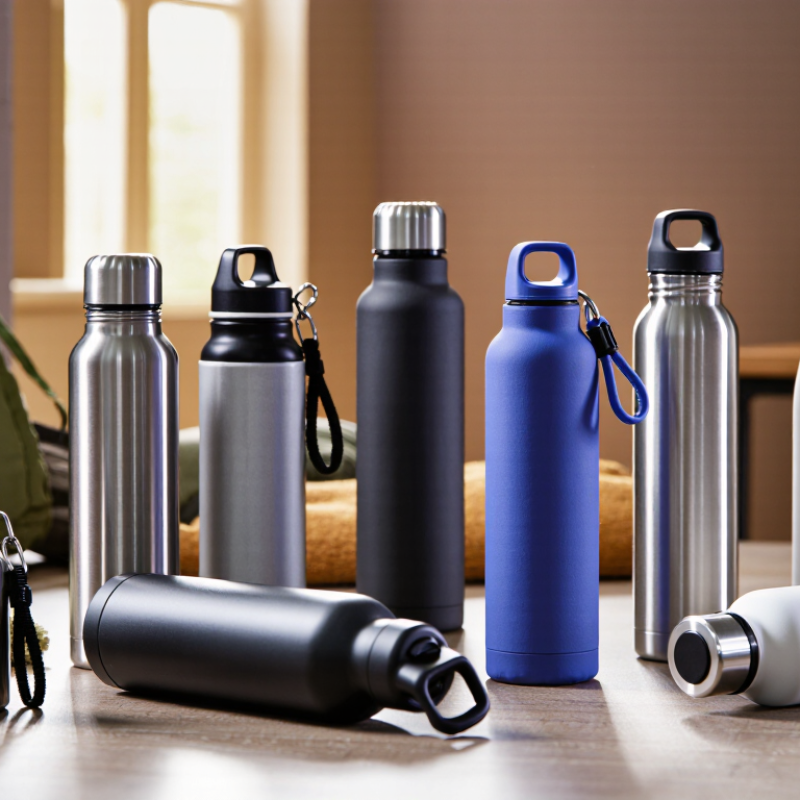
Cap choice changes everyday usability. Threaded caps are simple and dependable; flip-top or sport caps allow quicker sipping but add parts to clean. Wide mouths make filling and washing easier, though they can feel awkward while drinking on the move. A common design miss is choosing a cap for appearance before testing it with the bottle’s actual opening. Request samples, check for leaks, and test the label area before approving production.

How to Choose the Best Aluminum Drinking Bottles for Your Brand

Compare common nominal bottle capacities when planning your product range.

Common capacity options include 350, 500, 750, and 1,000 ml. These are nominal size choices; confirm the available capacity and dimensions with your manufacturer. When comparing designs, assess alloy and temper for forming and strength requirements, bottle shape for handling and packing, and cap compatibility with the neck finish and seal.

Assess Linings, Coatings, and Product Safety

When choosing an aluminum drinking bottle, look beyond its color and shape. The inner lining separates the drink from the metal, so ask what material it uses and which beverages it is designed to hold. A coating suited to plain water may not perform the same way with acidic drinks or repeated hot washing. Check the supplier’s care instructions and test documentation for your intended use. Looks can mislead.

Inspect both the inside and outside finishes. The interior should appear even, without bubbles, bare patches, or scratches near the rim. The exterior coating affects grip and durability, but chips can expose aluminum and make the bottle look worn. Small details matter. Pay attention to seams, threaded necks, and the base, where coating can be uneven. A shiny finish can still hide a weak spot; appearance alone is not proof of safety.

Ask for evidence that the lining and coating have been assessed for contact with the beverages and conditions you plan to offer. Confirm the documentation matches the actual bottle, not just a similar sample. Also ask how the finish holds up after repeated use and cleaning. Testing every combination may be impractical, and that limitation deserves an honest conversation. A clear answer about use, care, and known restrictions is more useful than a broad claim that a bottle is “safe.”

Evaluate Customization and Branding Options

Customization should make an aluminum drinking bottle recognizable and useful, not simply more decorated. Start with the bottle’s shape, capacity, and finish. A narrow curved surface may limit the size or placement of a logo. Matte coatings can feel refined, while glossy finishes may make colors appear brighter. Ask for a physical sample before approving a large order. Screen proofs can hide small details.

Tips: Check logo size, color accuracy, and print durability. Rub a sample gently with a damp cloth. Small text may disappear. Keep the design simple.

Compare printing and engraving options against your design and expected use. Printed graphics allow more color, while engraving creates a subtle, lasting mark but may offer less contrast. Request clear details about surface preparation, color matching, and any care instructions. These details vary by supplier, so avoid assuming one method will suit every bottle. I once thought a larger logo would improve visibility; on a tapered bottle, it looked crowded. Test the artwork at actual size and inspect it from arm’s length. A modest design can be easier to recognize.

How to Choose the Best Aluminum Drinking Bottles for Your Brand - Evaluate Customization and Branding Options

Customization Area Common Options Branding Potential Key Considerations Best Suited For
Bottle capacity Choose from available sizes, commonly around 500 ml to 1,000 ml; exact sizes vary by supplier. Capacity can influence how prominently the bottle is used and carried in everyday settings. Consider intended use, portability, packaging dimensions, and the audience’s hydration needs. Promotional merchandise, events, retail products, and employee gifts.
Exterior finish Options may include painted or powder-coated surfaces, metallic finishes, and matte or gloss effects. Color and finish help create a consistent visual appearance and make artwork stand out. Ask for a physical sample or finish specification; appearance can vary with lighting and production. Brands seeking a particular color palette or a distinctive shelf and event display.
Logo application Depending on the surface and supplier, options can include screen printing, digital printing, or laser marking. Logo size, placement, and contrast affect legibility and visibility. Confirm artwork requirements, printable area, color limits, durability, and any setup charges. Single-color artwork, detailed graphics, or a subtle mark, depending on the chosen method.
Artwork coverage Small logo placement, larger front or back graphics, or broader wraparound artwork where supported. More coverage can create a stronger visual statement; a smaller mark can look restrained. Check whether artwork may cross seams, curves, or other areas that affect alignment and readability. Campaign designs, event graphics, and products with a prominent visual identity.
Lid and closure Available designs may include screw caps, flip-top lids, or other compatible closure styles. A coordinated lid color or shape can complement the bottle’s overall look. Verify compatibility, leak-resistance claims, cleaning instructions, and whether replacement parts are available. Users with different carrying, drinking, or cleaning preferences.
Packaging Options may range from standard bulk packaging to individual cartons or custom-printed packaging. Printed packaging adds another surface for messaging and presentation. Review packaging cost, dimensions, shipping protection, and any material or recycling information. Gift programs, retail presentation, and direct-to-recipient distribution.
Production quantity and lead time Minimum order quantities and production schedules depend on the supplier, decoration method, and design. Order size can affect per-unit cost and the range of customization available. Request written details on minimum quantities, proof approval, sample availability, and delivery timing. Both small pilot orders and larger campaigns, subject to supplier terms.
Material and product information Confirm the bottle material, interior construction, coatings, and the components used for the lid and seal. Clear, accurate product details help support trustworthy product descriptions. Request relevant documentation and care instructions; do not assume every aluminum bottle is insulated or suitable for every beverage. Purchases where product specifications, intended use, or customer guidance matter.

Selection tip: Compare supplier samples, artwork proofs, specifications, and written order terms before approving production. Customization availability and performance vary by bottle design and supplier.

Verify Supplier Quality, Certifications, and Production Capacity

When choosing aluminum drinking bottles, assess the supplier’s quality controls before comparing prices. Ask how incoming aluminum is checked, how bottle seams are inspected, and whether finished products receive leak tests. Request recent test reports and confirm they apply to the exact bottle, coating, and lid you plan to order. A certificate alone is not proof of every product’s performance. Check its scope, issuer, and validity.

Tips: Request a sample from a normal production run, not only a specially prepared sample. Examine the inside coating under bright light. Ask for documentation on material safety and relevant food-contact requirements in your sales markets. Keep copies. Verify details.

Production capacity deserves equal attention. Ask for monthly output, current lead times, minimum order quantities, and the number of lines available for your design. Have the supplier explain how it handles peak-season orders and equipment downtime. A large stated capacity may include other customers’ orders, so ask what volume is actually reserved for you. Compare sample quality with a later production batch; small differences can reveal process weaknesses. It is easy to focus on certifications and miss the practical question: can the factory deliver consistent bottles on schedule? Some answers may remain uncertain, so record assumptions and review them before approving a purchase order.