China Top Aluminum Bottle Manufacturers for Global Buyers
Choosing China’s top aluminum bottle manufacturers requires more than comparing factory prices. Global buyers must examine material grades, forming precision, coating safety, closure compatibility, and verified production capacity. A bottle may look polished on a sample table, yet fail during filling, transport, or repeated handling. That detail matters.
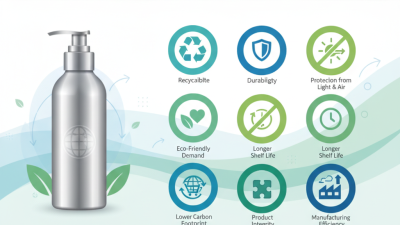
The International Aluminium Institute projects global aluminium demand could increase by 80% by 2050. Its reports also note that recycling aluminium uses roughly 95% less energy than primary production. Dr. Fiona Solomon, former CEO of the Aluminium Stewardship Initiative, has said, “Aluminium is a permanent material that can be recycled over and over again.” This principle supports the growing role of aluminum bottles in beverages, cosmetics, pharmaceuticals, and premium packaging. Still, recyclability does not guarantee sustainability. Coatings, mixed closures, transport distance, and weak collection systems can reduce real-world benefits.
Reliable manufacturers should provide alloy information, dimensional inspection records, migration testing, and batch traceability. ISO 9001 and ISO 14001 certifications can support supplier evaluation, but certificates alone are not proof of consistent performance. Buyers should request production samples, drop-test results, filling-line trials, and evidence of recycled content. The Ellen MacArthur Foundation’s circular economy reports also emphasize system design, not just material selection. That warning deserves attention. A lightweight bottle is not automatically a responsible bottle. This guide reviews China-based suppliers through manufacturing experience, quality controls, customization ability, export readiness, and transparent communication, helping international buyers choose aluminum bottles with fewer unpleasant surprises.
Aluminum Bottle Manufacturing in China: Materials, Processes, and Standards
China Top Aluminum Bottle Manufacturers for Global Buyers
Aluminum Bottle Manufacturing in China: Materials, Processes, and Standards
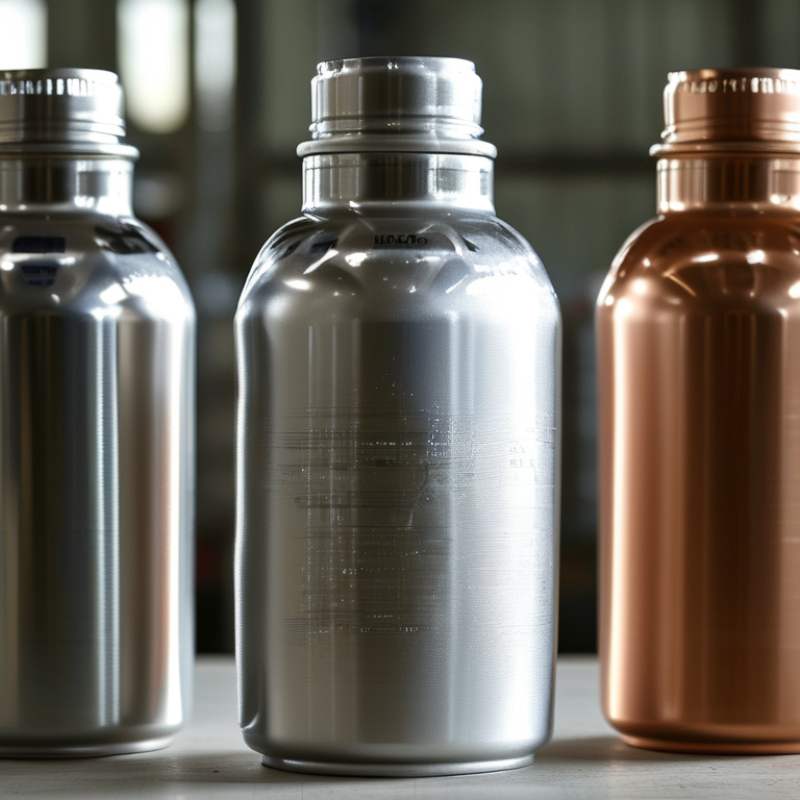
Reliable aluminum bottle production starts with the alloy choice. Many manufacturers use 1050, 3003, or similar grades for their balance of formability, strength, and corrosion resistance. The correct grade depends on the bottle’s size, wall thickness, closure, and intended contents. Recycled aluminum may reduce material impact, but its quality requires careful control.
Production commonly begins with blank cutting and deep drawing. The metal is shaped through several forming stages. Ironing can create a more consistent wall thickness. Necking and threading then prepare the opening for the closure. Annealing may restore flexibility after heavy forming. Small process changes can affect the bottle’s weight and appearance.
Details matter.
After forming, bottles are washed, dried, and inspected. Internal coatings may be applied when product compatibility requires extra protection. Exterior printing usually follows surface treatment and curing. Quality teams should check dimensions, coating adhesion, torque performance, and leakage under controlled pressure. Sampling alone may miss problems, so critical lines need documented in-process checks.
Manufacturers serving global buyers often work with ISO 9001 systems and applicable food-contact requirements. Buyers should request current test reports, material declarations, and traceability records. Requirements may differ between markets, so one certificate rarely proves full compliance. No factory is flawless. A strong supplier explains its limitations, records deviations, and improves the process instead of hiding small defects.
China Aluminum Bottle Manufacturing: Common Alloy Profiles
Aluminum bottle bodies are commonly produced from wrought aluminum sheet or coil. The chart compares representative alloying-element percentages for grades frequently considered for formed containers and lightweight packaging. Values are midpoints of composition ranges specified in ASTM B209 and EN 573-3; a zero indicates that the element is not a principal alloying addition for the listed grade.
Higher magnesium or manganese content can increase strength, while alloy selection must also consider formability, necking, surface finishing, corrosion resistance, and the buyer’s applicable food-contact and quality requirements.
Product Types, Customization Options, and Design Capabilities
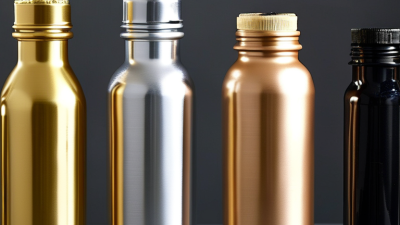
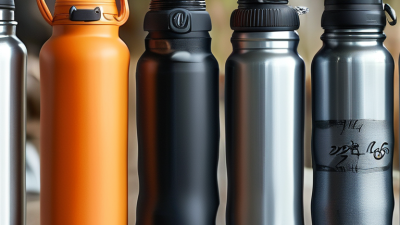
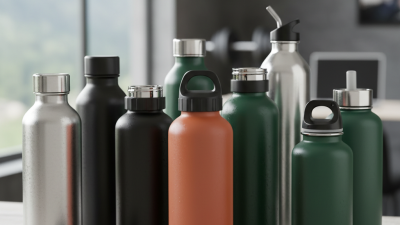
China’s leading aluminum bottle manufacturers serve global buyers with practical product choices. Common types include reusable water bottles, sports bottles, travel flasks, and lightweight promotional containers. Each type supports different capacities, closures, and carrying needs. A 500 ml bottle may suit daily commuting, while a larger model fits outdoor activities.
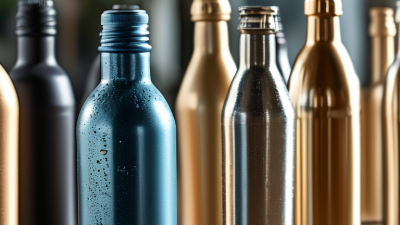
Customization usually begins with the bottle shape. Buyers can request straight walls, tapered bodies, ergonomic grips, or compact silhouettes. Surface finishes include matte, gloss, brushed metal, and soft-touch coatings. Printing methods may include screen printing, heat transfer, laser engraving, and full-color labeling. Cap choices also matter, including screw caps, sports lids, flip tops, and leak-resistant designs.
Good manufacturers provide drawings, samples, material details, and production checks before bulk orders. They should explain aluminum thickness, coating durability, inner lining, and closure performance clearly. Design teams can adjust artwork for curved surfaces and advise on readable logo placement. Small details matter, such as thread smoothness and the feel of the cap.
Not every prototype works perfectly. A narrow opening may look elegant but clean poorly. A heavy coating can improve appearance yet affect recycling goals. Experienced suppliers test these trade-offs instead of promising everything at once. Buyers should request samples, review inspection records, and confirm packaging requirements before production. Reliability is built through evidence, not confident wording.
Quality Control, Certifications, and Export Compliance
Reliable aluminum bottle manufacturers in China should show quality control through evidence, not promises.
Ask for material certificates, batch records, and production samples before placing a large order. Inspectors should verify aluminum grade, wall thickness, neck dimensions, coating adhesion, and leak resistance.
A bottle may look flawless yet fail after repeated filling. That detail matters.
Certifications should match the bottle’s intended use and destination. ISO 9001 supports documented quality procedures, but it does not prove food-contact safety.
For food or beverage packaging, request applicable test reports under destination-market rules, such as FDA requirements, EU food-contact standards, or other recognized regulations.
Verify laboratory names, report dates, tested materials, and product references. Export documents should include commercial invoices, packing lists, certificates of origin, and accurate customs classifications.
Requirements can change. Confirm them with a qualified customs professional.
Tips:
Request a pre-shipment inspection with photos and random sampling. Check whether the manufacturer can trace each batch to raw material records. Ask how defective bottles are separated and recorded.
Do not accept copied certificates. A small inconsistency in coating thickness may reveal weak process control.
I have seen buyers focus on unit price and overlook closure compatibility, which later caused leakage during transport.
A better review includes vibration testing, temperature exposure, and repeated opening tests. No supplier is perfect. The important question is how openly problems are measured, reported, and corrected.
Ordering, Pricing, Logistics, and Supplier Communication
Global buyers should treat aluminum bottle purchasing as a technical project, not a simple price comparison. Ask manufacturers for alloy grade, wall thickness, internal coating, neck dimensions, closure compatibility, and test reports. A quotation should separate aluminum material, forming, printing, tooling, packaging, and inspection costs. The London Metal Exchange benchmark often influences material pricing, while conversion premiums depend on order volume and production complexity. A low quote can still become expensive after tooling and rejected samples.
Ordering details need precision.
Confirm minimum order quantity, sample approval, production lead time, carton dimensions, pallet limits, and Incoterms in writing. For ocean shipments, request gross weight, loading quantity, and shipping documents before production ends. The International Aluminium Institute reports that recycled aluminum uses about 5% of the energy required for primary aluminum production. This supports recycled-content requests, but buyers should verify certificates and percentages. Claims without evidence deserve careful review.
Tips:
Send a dimensioned drawing, not only a reference photo. Keep one approved sample for comparison. Allow buffer time for port delays. Communication can still fail, even with clear emails. Use a shared specification sheet and record every revision. Suppliers should explain tolerance limits, coating performance, and inspection methods. Buyers should also admit unclear requirements early; changing artwork after tooling approval may create avoidable cost and delay. Industry freight reports from UNCTAD continue to show that route disruption can affect schedules and shipping costs, so logistics assumptions should be checked before signing.