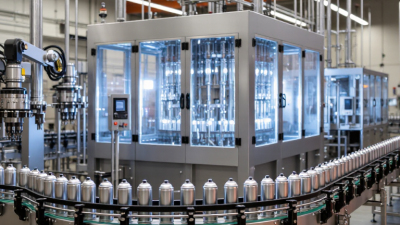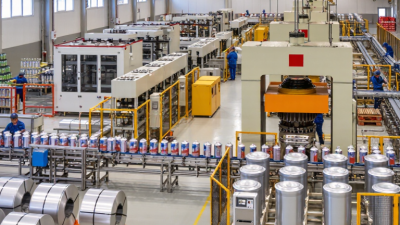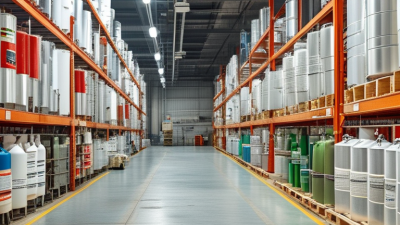
Selecting reliable aerosol can manufacturers requires more than comparing prices, production capacity, or attractive websites. Buyers must examine material quality, filling compatibility, tooling flexibility, recycled content, certifications, and delivery performance. A can may look identical on a specification sheet, yet behave differently during forming, printing, transport, and pressure testing.
Industry data shows why this market deserves closer attention. AEROBAL’s 2023 statistics reported billions of aluminum aerosol cans produced by its member companies worldwide, confirming the format’s substantial industrial scale. Smithers’ global packaging outlook also identifies aerosol packaging as a resilient segment, supported by demand from personal care, household products, healthcare, and food applications. Grand View Research similarly projects continued aerosol packaging growth, although regional forecasts differ. The numbers are useful. They are not perfect.
Gregor Spengler, Secretary General of AEROBAL, has emphasized, “The aerosol can is a modern, convenient, and sustainable packaging solution.” That view reflects the industry’s direction, but sustainability claims still require verification. Recycled metal content, manufacturing energy, coating systems, and transport distances can change the real environmental profile. Buyers should request evidence, not slogans.
This guide evaluates ten aerosol can manufacturers for global buyers through practical criteria. These include production scale, geographic reach, customization, quality systems, sustainability reporting, and technical support. Some manufacturers excel in aluminum cans. Others are stronger in tinplate, decoration, or regional supply. No ranking is flawless. Supplier performance can vary by plant, market, and order volume. Always validate current certifications, sample quality, lead times, and regulatory compliance before signing a contract.
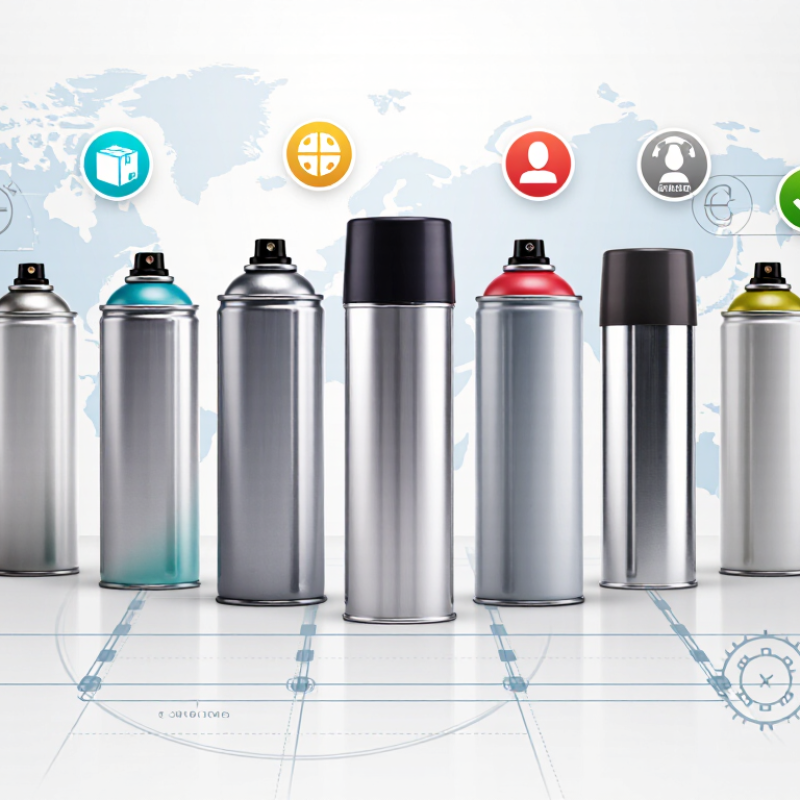
A leading aerosol can manufacturer is defined by more than production volume. It should combine proven forming experience, stable quality systems, and transparent supply data. Grand View Research estimates that the global aerosol cans market will expand at about 5% annually through 2030. This growth increases pressure on suppliers to deliver consistently, not merely quickly.
Reliable manufacturers control steel or aluminium thickness, internal coatings, valve fit, crimping pressure, and leak performance. Their laboratories should provide batch records, pressure-test results, and traceable inspection data. ISO 9001 certification is useful, but it is not enough by itself. The Smithers report, The Future of Aerosol Packaging to 2028, highlights lightweighting and improved recyclability as major packaging priorities. A strong supplier should therefore reduce material use without weakening the can wall. That balance is difficult. Sometimes, the cheapest design creates more production risk.
Tips: Ask for recent third-party audit results, sample cans, dimensional reports, and failure-rate data. Check whether the factory can maintain quality during seasonal demand. Also review its recycling guidance and regional compliance support. A capable manufacturer should explain limitations clearly, including tooling lead times, minimum order quantities, and transport risks. I would not rely on impressive catalogue photos alone. Factory evidence matters more.
Global buyers often evaluate aerosol can manufacturers by their ability to support a broad range of nominal fill volumes, compatible valve systems, reliable sealing, consistent dimensions, export packaging, and applicable safety and transport requirements. The chart presents common nominal aerosol can fill-volume options used across personal care, household, industrial, automotive, and technical products. Exact availability varies by material, diameter, product formula, and regional regulations.
Global buyers should compare aerosol can manufacturers beyond price. Begin with material quality, wall thickness, internal coating, and dimensional accuracy. These details affect pressure resistance, product compatibility, and filling-line performance. Ask suppliers for test reports, batch records, and samples from current production. A can that looks perfect may still fail after transport or storage. Experience matters here.
Review the supplier’s production capacity, minimum order quantity, tooling support, and lead times. Confirm whether the can matches your valve, actuator, and filling equipment. Reliable manufacturers explain tolerances clearly and communicate production changes early. Check quality systems, export documentation, packaging methods, and traceability. Independent testing can strengthen confidence, especially for regulated markets. However, certificates alone do not prove consistent factory performance.
Tips: Request a small trial order before signing a long-term contract. Measure can weight, height, coating condition, and seam quality. Test filled samples under realistic temperature and handling conditions. Compare delivery records, not only written promises. Ask how defects are handled and how quickly replacements are arranged. Sustainability also deserves practical attention. Review recycled material content, energy use, and shipping efficiency. Some suppliers provide strong environmental claims but limited evidence. That gap deserves careful questions. Do not overlook communication quality; unclear replies often become costly production delays.
The global aerosol can market rewards manufacturers that combine stable forming, clean interiors, and dependable delivery. Grand View Research valued the market at approximately USD 11.7 billion in 2023, with steady growth expected through 2030. The European Aerosol Federation also reported about 5.7 billion aerosol units filled in Europe during 2023. These figures show strong demand, but capacity alone does not prove reliability.
The leading ten manufacturer profiles reveal different strengths. One focuses on lightweight aluminum cans for personal care. Another specializes in three-piece steel cans for household products. A third operates high-speed lines near major filling plants. One regional producer offers short runs and flexible decoration. Another invests heavily in recycled steel. A sixth is known for precise valve compatibility testing. A seventh supplies food-safe aerosol packaging with strict internal coatings. An eighth serves industrial maintenance markets with thicker walls. A ninth combines local warehouses with export logistics. The tenth emphasizes digital quality records and batch traceability.
Practical buyers should inspect more than glossy catalogs. Ask for wall-thickness data, pressure-test results, coating specifications, and recent inspection records. A can may look perfect yet fail during transport. That detail matters.
Smithers’ packaging analyses repeatedly identify sustainability, material efficiency, and supply resilience as major market pressures. However, recycled content can affect forming behavior if process controls are weak. This is where supplier claims need verification.
Factory audits, sample filling trials, and documented compliance provide stronger evidence than awards or advertising. Mistakes still happen, especially during rapid product changes.
Choosing an aerosol can manufacturer requires more than comparing unit prices. Global buyers should examine quality systems, production records, and testing methods. A reliable supplier can provide batch traceability, material certificates, and inspection reports. ISO 9001 certification is useful, but daily process control matters more. Ask how the factory checks wall thickness, seam strength, internal pressure, leakage, and crimp dimensions. Small errors can cause major filling problems.
Steel and aluminum are common choices, each with practical advantages. Steel offers strong pressure resistance and a broad decoration surface. Aluminum is lightweight, corrosion-resistant, and suitable for a smooth, premium appearance. Internal coatings must match the formula and storage conditions.
Buyers should request compatibility testing, especially when the contents are acidic, alkaline, or solvent-based. Regional packaging, transport, recycling, and labeling rules also need review before production begins.
Customization can include can diameter, height, shoulder shape, valve fit, actuator design, color, coating, and printing method. A useful manufacturer should support technical drawings and pre-production samples. I have found that samples sometimes reveal issues hidden in digital artwork, such as weak contrast or poor grip. A perfect specification rarely exists at the first attempt. Leave time for filling trials and user feedback. Decoration quality is important, but functional consistency should come first. Suppliers that communicate limitations honestly are usually more dependable than those promising everything.
Choosing an aerosol can manufacturer requires more than comparing unit prices. Global buyers should examine production experience, material quality, and documented testing procedures. Ask how the manufacturer controls steel or aluminum thickness, valve fit, internal coating, and pressure resistance. These details affect leakage, shelf life, and filling-line performance.
Request recent inspection reports, batch traceability records, and production samples. A reliable supplier should explain its quality system clearly, not hide behind vague claims. Check whether its facilities can support your order volume and target delivery schedule.
Confirm export packaging, language support, and compliance with the regulations in your destination markets. Local requirements may differ significantly.
Tips: Compare at least three quotations, but never choose by price alone. Test samples under realistic storage conditions. Discuss minimum order quantities and mold fees before signing. Also, verify that the quoted specification matches the final production specification. A sample can perform well while a larger batch reveals inconsistent dimensions. This is easy to overlook. Buyers should also review inspection responsibilities, payment terms, and remedies for defective shipments. Clear records protect both sides, although they cannot replace regular communication during production.
| Cookie | Duration | Description |
|---|---|---|
| cookielawinfo-checkbox-analytics | 11 months | This cookie is set by GDPR Cookie Consent plugin. The cookie is used to store the user consent for the cookies in the category "Analytics". |
| cookielawinfo-checkbox-functional | 11 months | The cookie is set by GDPR cookie consent to record the user consent for the cookies in the category "Functional". |
| cookielawinfo-checkbox-necessary | 11 months | This cookie is set by GDPR Cookie Consent plugin. The cookies is used to store the user consent for the cookies in the category "Necessary". |
| cookielawinfo-checkbox-others | 11 months | This cookie is set by GDPR Cookie Consent plugin. The cookie is used to store the user consent for the cookies in the category "Other. |
| cookielawinfo-checkbox-performance | 11 months | This cookie is set by GDPR Cookie Consent plugin. The cookie is used to store the user consent for the cookies in the category "Performance". |
| viewed_cookie_policy | 11 months | The cookie is set by the GDPR Cookie Consent plugin and is used to store whether or not user has consented to the use of cookies. It does not store any personal data. |