

One Llodio Drive, Hermitage, PA USA 16148

What Is the Best 1 Liter Aluminum Bottle for Bulk Buying?
Choosing the best 1 liter aluminum bottle for bulk buying requires more than comparing prices. Large orders magnify small design problems. A loose cap, thin wall, or uneven coating can affect thousands of units.
Experienced purchasing teams usually examine material grade, bottle weight, opening size, closure quality, and surface finish. They also request samples before approving a full shipment. A bottle that feels sturdy in one hand should remain stable on a warehouse pallet. Its opening should support easy filling, cleaning, and label application.
Ask suppliers for clear specifications and consistent production records. Useful evidence may include food-contact documentation, leak-test results, coating details, and packaging information. These records do not replace independent checks, but they improve purchasing confidence. Confirm whether the bottle is suitable for water, sports drinks, or other intended beverages. Some aluminum products require an internal lining, especially when used with acidic liquids.
Bulk efficiency matters too. Measure carton dimensions, pallet capacity, minimum order quantities, and replacement policies. A lower unit price may become expensive when damaged bottles arrive or lead times change. That part is easy to overlook. Request a written quotation with every assumption stated.
There is no universal winner. The best 1 liter aluminum bottle depends on use, budget, branding, and distribution conditions. A retail-ready bottle may need a polished finish, while an event supplier may value speed and simple packaging. I would not trust attractive photos alone. Sample testing, supplier communication, and careful cost review usually reveal the stronger choice. Even then, some uncertainty remains. That is why a small trial order can be wiser than an immediate large commitment.
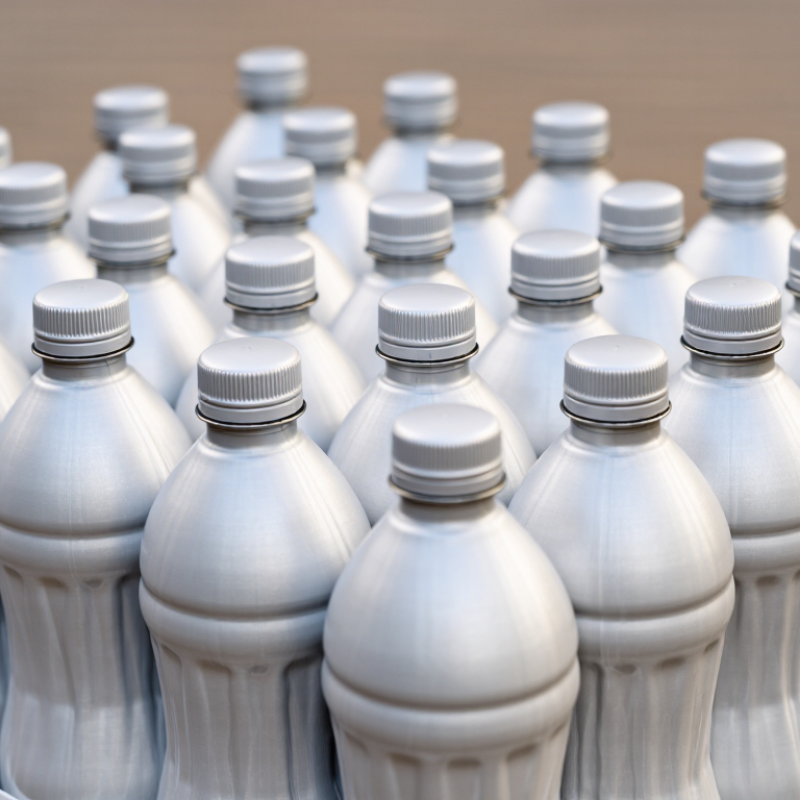
What Defines the Best 1 Liter Aluminum Bottle for Bulk Buying?
The best 1 liter aluminum bottle for bulk buying is defined by consistent performance, not the lowest quotation. A dependable bottle should use food-contact aluminum, resist dents, and maintain a reliable seal after repeated handling. In practical purchasing, alloy consistency matters because uneven walls can create weak points near the shoulder and threaded neck. A 1 liter bottle should also fit standard filling, labeling, and carton processes without frequent adjustments.
The closure deserves equal attention. A leak-resistant cap, clean thread, and replaceable gasket reduce spills during transport. Ask suppliers for wall-thickness tolerance, pressure testing, coating specifications, and sample inspection records. The International Aluminium Institute reports that recycling aluminum can require about 95% less energy than producing primary aluminum. That figure supports aluminum’s circularity, but it does not excuse poor manufacturing or excessive packaging.
Bulk buyers should compare total delivered cost, not unit price alone. Include cartons, protective dividers, rejected units, freight damage, and storage space. A 2023 report from the International Aluminium Institute also highlights rising demand for recycled aluminum across packaging supply chains. Still, recycled content needs verification, because vague claims can weaken purchasing decisions. I would test a small batch first. Fill it, stack it, chill it, and shake it. One overlooked detail remains: a bottle may look durable yet scratch easily around the base. That flaw can matter more than a modest price difference.
What Is the Best 1 Liter Aluminum Bottle for Bulk Buying? - What Defines the Best 1 Liter Aluminum Bottle for Bulk Buying?
| Evaluation Dimension | Recommended Target | Acceptable Bulk-Buying Range | Why It Defines the Best Bottle | Verification Method |
|---|---|---|---|---|
| Nominal capacity | 1,000 mL | 950–1,050 mL, according to the required fill tolerance | Provides the intended one-liter capacity while allowing practical manufacturing tolerances. | Measure the filled volume at the specified fill line using a calibrated volumetric container. |
| Bottle material | Food-contact aluminum alloy | Commonly used aluminum alloys with documented food-contact suitability | Aluminum is lightweight, recyclable, and provides good impact resistance for repeated distribution. | Request the alloy declaration, material specification, and food-contact compliance documents. |
| Empty bottle weight | Approximately 100–180 g for a single-wall design | About 90–220 g, depending on wall thickness, finish, and closure | Lower weight can reduce freight cost, but excessive weight reduction may reduce dent resistance. | Weigh a statistically representative sample from each production batch. |
| Wall construction | Single-wall for cost efficiency; double-wall vacuum for temperature retention | Single-wall or insulated construction based on the application | Single-wall bottles are usually more economical for large quantities, while vacuum construction improves thermal performance. | Inspect cross-sections or technical drawings and conduct a thermal-performance test when insulation is required. |
| Interior protection | Food-grade internal coating for acidic, salty, or flavored beverages | Uncoated only when compatibility has been specifically confirmed | A suitable lining helps prevent beverage contact with aluminum and reduces taste, corrosion, and discoloration risks. | Review coating specifications, migration testing, and beverage-compatibility results. |
| Neck and opening size | Wide enough for easy filling and cleaning; compatible with the selected closure | Approximately 28–63 mm opening diameter, depending on use | A wider opening improves cleaning and filling efficiency, while a narrower neck may reduce material and closure cost. | Check drawings, closure fit, filling-line compatibility, and cleaning access. |
| Closure and leak resistance | Threaded, reusable closure with a food-contact gasket | Cap system tested for repeated opening and closing | Reliable sealing reduces leakage, product loss, carton damage, and customer complaints. | Perform an inverted leak test and pressure or drop testing on filled samples. |
| Durability | No leakage or loss of function after normal handling and repeated use | Evaluate denting, seam integrity, base stability, and cap performance | Bulk purchases magnify small defect rates, so consistent durability is more important than appearance alone. | Use sampling inspection, drop tests, compression checks, and repeated closure-cycle tests. |
| External finish | Scratch-resistant coating or anodized finish suitable for the intended environment | Brushed, painted, powder-coated, or anodized surface | The finish affects appearance, handling, corrosion resistance, and the long-term presentation of the product. | Inspect coating adhesion, abrasion resistance, color consistency, and surface defects. |
| Reusable design | Replaceable or serviceable closure with clear care instructions | Designed for repeated use where permitted by the coating and closure system | A reusable structure can provide better user value than a disposable design, provided hygiene and maintenance are manageable. | Review cleaning instructions, replacement-part availability, and cycle-test results. |
| Packaging efficiency | Stable nesting or compact carton configuration without surface damage | Confirm carton quantity, pallet pattern, and shipping dimensions before ordering | Efficient packing can lower storage and freight costs and reduce damage during bulk transport. | Approve a packaging sample and calculate carton volume, pallet utilization, and shipping weight. |
| Quality consistency | Documented inspection plan with defined acceptance criteria | Use agreed sampling levels for capacity, leakage, appearance, and dimensions | Consistent output protects the buyer from receiving mixed dimensions, finishes, or closure fits in one shipment. | Require pre-shipment inspection records and retain approved reference samples. |
| Best overall bulk-buying profile | 1,000 mL single-wall aluminum bottle with a food-grade lining, reusable threaded closure, leak-tested construction, and efficient packaging | Add vacuum insulation only when temperature retention justifies the higher cost and shipping weight | This configuration balances capacity, safety, durability, unit cost, freight efficiency, and repeat-use value for many bulk applications. | Approve samples against a written specification before placing the production order. |
Related Posts
-
Top 10 Benefits of Using a 1 Liter Aluminum Bottle for Everyday Hydration
-
Best 16 oz Aluminum Bottle Options for Global Buyers?
-
What Are the 2026 Top Aluminum Water Bottles for Buyers?
-

Top 10 Benefits of Aluminum Packaging for Your Products?
-

Top 10 Aerosol Manufacturers You Should Know?
-

What is the Best Type of Pharmaceutical Containers for Export?