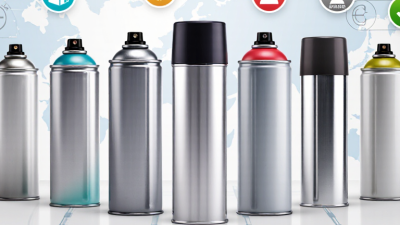
What Are Aerosol Manufacturers and What Do They Make?

Aerosol manufacturers make pressurized products that release a controlled spray, foam, or stream. Their work spans more than filling cans. It includes choosing containers, valves, actuators, and formulations that deliver the product consistently. A bathroom deodorant, a cooking spray, and a household cleaner may look unrelated, yet each depends on careful coordination between contents and packaging.

The market is substantial. Grand View Research’s Aerosol Market Size report estimated the global market at about US$77.1 billion in 2023, with further growth projected through 2030. That figure describes a broad market, not manufacturers’ revenue alone. It still signals the scale of demand across personal care, household, healthcare, and industrial uses. William C. Hinds, an aerosol science authority and author of Aerosol Technology, defines an aerosol as “a suspension of solid or liquid particles in a gas.” That basic principle helps explain why nozzle design and particle behavior matter.

Manufacturers must also consider product protection, reliable dispensing, material use, and end-of-life handling. Small details count: a valve that clogs can frustrate users, while an actuator that gives uneven output can waste contents. The European Aerosol Federation’s annual statistics provide another useful industry reference, tracking production by region and product category. Those numbers offer context, but they do not tell every story. Factory practices and product performance vary. Some choices deserve closer scrutiny. This guide explains what aerosol manufacturers make, how the products are produced, and what distinguishes one type of manufacturer from another.
What Are Aerosol Manufacturers and What Do They Make?

What Aerosol Manufacturers Are and How They Fit Into the Packaging Industry

Aerosol manufacturers make and prepare pressurized packages used for products such as household cleaners, personal care items, and paints. Their work connects container production with the wider packaging industry. They may form metal cans, source valves and actuators, or fill and seal containers for product makers. Some handle only packaging components; others manage several stages.

A can is more than a metal shell. Its dimensions, lining, valve, and nozzle must suit the product and the way people use it. A fine mist needs a different spray pattern from a thicker stream. Manufacturers test samples for leakage, consistent dispensing, and resistance to handling. Small details matter. A cap that fits poorly can affect storage and transport.

These companies also coordinate with packaging designers, material suppliers, filling facilities, and distribution teams. Their choices influence shelf appearance, shipping weight, and how easily a package can be recycled where suitable facilities exist. A lightweight can may save material, but it still needs enough strength for its intended use. The balance is not always tidy. Packaging decisions depend on the product, equipment, and supply chain, so one solution rarely fits every application. As designs change, manufacturers review component compatibility and production performance rather than relying on appearance alone.

How Aerosol Products Are Designed, Formulated, and Produced

Aerosol products are designed around a simple question: what should reach the user, and how should it come out? Engineers set the spray pattern, dose, and operating feel before refining the formula. A fine mist is not automatic. The valve, actuator, can, and product must work together, whether the target is a broad surface or one small spot.

Formulators test how ingredients behave with the container and valve. They check viscosity, stability, and spray consistency, then adjust the mix when a sample clogs or sputters. Small changes matter. The European Aerosol Federation’s 2023 European production statistics report about 5.3 billion aerosol units produced in Europe, showing the scale at which reliable design must perform. That figure also makes quality control more than a final inspection.

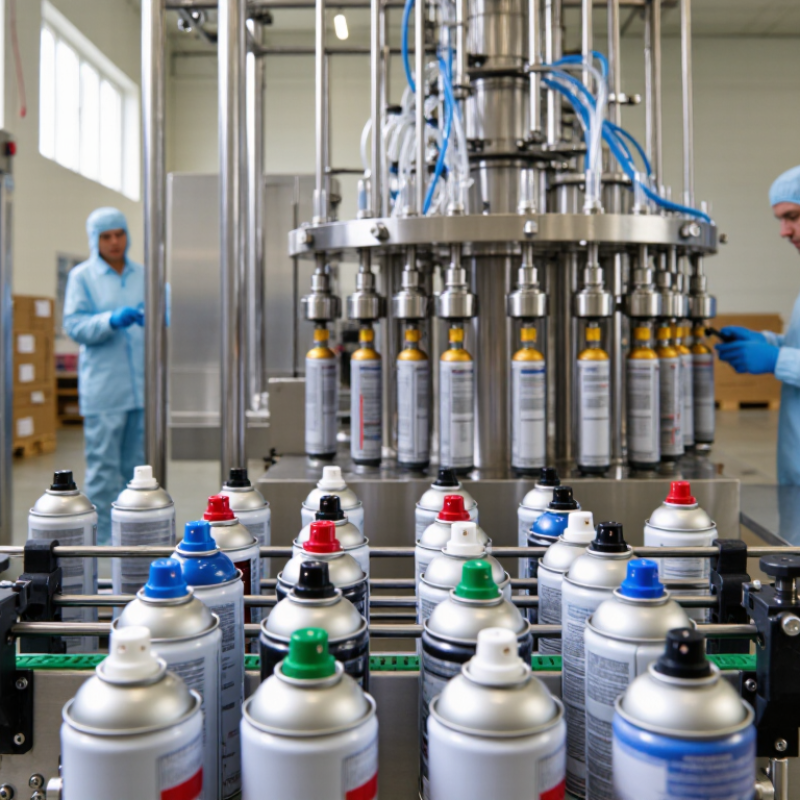
During production, cans are filled, valves are crimped into place, and each batch is checked for weight, leakage, and spray output. Test cans may be sprayed at different angles to reveal uneven flow. A product can pass a bench test yet disappoint in a cold bathroom or a warm storeroom, so real-use testing matters. Manufacturers refine the process, but no test setup perfectly recreates every home.

Which Products Aerosol Manufacturers Make

Aerosol manufacturers make products that dispense a measured spray, foam, or stream from a pressurized container. Their range includes deodorants, shaving foams, hair sprays, air fresheners, surface cleaners, cooking sprays, paints, and lubricants. Personal-care products are especially prominent. Grand View Research’s 2024 aerosol market report identifies personal care as the largest application segment in 2023. The package may look simple, but manufacturers must match the formula, valve, and spray pattern. A fine mist suits a different task from a thick foam.

The European Aerosol Federation’s 2023 statistical report recorded about 5.3 billion aerosol cans produced in Europe in 2022. That scale reflects many everyday uses, from bathroom cabinets to workshop shelves. Household cleaners need controlled coverage; paint sprays need an even finish; cooking sprays need a light coating. Small details matter. Manufacturers also test how consistently products dispense and how containers withstand handling. Product categories are useful, but not perfect: one cleaning spray might be designed for kitchens, while another targets glass. The label alone cannot tell the whole story.

What Are Aerosol Manufacturers and What Do They Make? — Which Products Aerosol Manufacturers Make

Aerosol manufacturers formulate products and package them in pressurized containers fitted with valves and actuators. When the valve is pressed, the contents are released as a spray, mist, foam, or stream. Product formats and ingredients vary by intended use.

Product category Common products Typical delivery form Common use
Personal care Deodorants, antiperspirants, hair sprays, shaving foams, dry shampoos Fine spray, foam, or powder Applying grooming and personal-care products evenly or conveniently
Household care Air fresheners, furniture polishes, glass cleaners, fabric-care sprays Mist, spray, or foam Distributing cleaners, polish, or fragrance over household surfaces or into the air
Food products Whipped toppings, cooking sprays, dessert foams Foam or controlled spray Dispensing edible products in measured or ready-to-use portions
Paints and coatings Spray paints, primers, protective coatings, marking paints Directed liquid spray Applying coatings to surfaces, objects, or marked areas
Automotive and maintenance Lubricants, brake cleaners, penetrating oils, tire inflators Spray, stream, or foam Applying maintenance products to vehicle parts and equipment
Industrial products Adhesives, mold-release agents, compressed-gas dusters, leak detectors Spray, liquid stream, or gas discharge Supporting manufacturing, equipment cleaning, and inspection tasks
Health and first aid Topical wound sprays, skin-cooling sprays, some metered-dose inhalers Fine spray or metered aerosol Delivering products to the skin or, for approved inhalers, a measured dose for inhalation
Garden and outdoor care Some insect-control sprays, plant-care products, and outdoor marking sprays Spray or directed stream Applying products to targeted outdoor areas; use according to label directions

Note: Not every product in these categories is packaged as an aerosol. Formulations, propellants, container materials, and spray characteristics depend on the product and its intended use.

Where Aerosol Products Are Used Across Industries

Aerosol products serve many industries because they deliver liquids, foams, or powders in controlled sprays. In healthcare settings, they can dispense disinfectants and topical products. Cleaning teams use spray cleaners on counters, glass, and equipment. The fine mist can reach narrow gaps, though it may also drift onto nearby surfaces.

In manufacturing and maintenance, aerosol lubricants help coat hinges and moving parts without pouring oil. Automotive workshops use sprays for cleaning and surface preparation. Food-service operations may rely on suitable cleaning products for work areas, following product directions carefully. Personal-care items, such as deodorants and hair sprays, are also common. Each application needs a compatible container, valve, and formulation. A poor spray pattern can waste product or make precise work harder. Packaging is not a minor detail.

Tips: Match the spray format to the task. Check the label for surface compatibility and ventilation guidance. Test on a small, inconspicuous area when practical. Store containers away from heat, and do not assume every aerosol works the same way.

How Aerosol Manufacturers Address Quality, Safety, and Environmental Standards

Aerosol manufacturers do more than fill cans. They select compatible containers, valves, and formulations, then check that each component works safely as a system. Small details matter. A poorly crimped valve can cause a leak, while an inconsistent fill may affect spray performance. Quality teams commonly inspect fill weights, test seals, and sample spray patterns across production batches. Records help trace results back to a production run. Still, sampling cannot reveal every defect.

Safety controls begin on the factory floor. Staff may monitor ventilation, use suitable protective equipment, and keep ignition sources away from areas handling flammable materials. Pressure and leak checks help identify weak containers before shipment. Clear procedures matter, but they need regular review; a checklist can become routine rather than thoughtful. Environmental work also involves practical choices. Manufacturers can reduce filling waste, improve energy use, and assess lighter packaging. They may track emissions from production and choose materials that local recycling systems can actually process. “Recyclable” on paper is not always recyclable nearby. These efforts require measurement, not just good intentions, and trade-offs remain between durability, safety, and material use.

How Aerosol Manufacturers Address Environmental Standards

Ozone-Depletion Potential (ODP) of Representative Aerosol Propellants

ODP is measured relative to CFC-11, which is assigned a value of 1. Lower values indicate less ozone-depletion potential. Zero ODP does not mean zero climate impact or eliminate other environmental considerations.