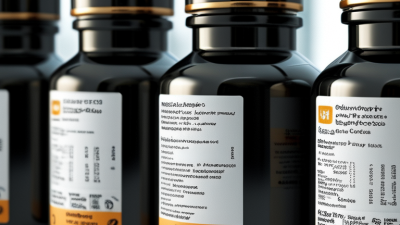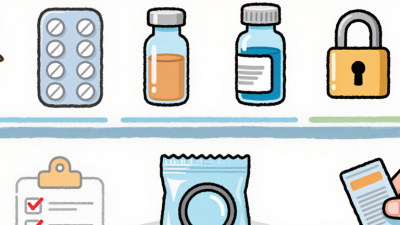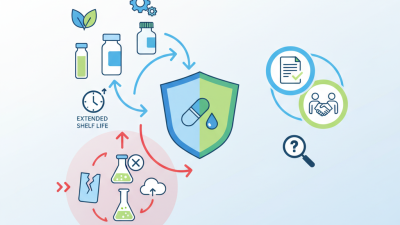
Pharmaceutical packaging does more than hold a medicine. It protects product quality, supports accurate dosing, and helps patients identify what they are taking. The choices are practical: a blister pack clicks under a thumb, a glass vial seals a sterile dose, and a carton groups products for storage and handling. The right format depends on the medicine, its route of use, and its sensitivity to light, moisture, or temperature.
The IQVIA Institute’s 2024 outlook projected global medicine spending could reach $2.3 trillion by 2028. More medicines moving through supply chains means packaging decisions matter at every stage. The World Health Organization has estimated that one in ten medical products in low- and middle-income countries is substandard or falsified. Packaging cannot solve that problem alone, but tamper-evident features and clear product information can support safer handling and identification. As packaging educator Walter Soroka puts it, “Packaging is a coordinated system of preparing goods for transport, warehousing, logistics, sale, and end use.” His definition captures the system behind each pack.
This guide compares primary packaging, including blister packs, bottles, vials, and ampoules; secondary packaging, such as cartons and leaflets; and tertiary packaging used for transport. Each has trade-offs. Glass can protect sensitive products, yet it is heavier and breakable. Blisters separate doses, but they may be harder for some patients to open. There is no perfect format. Understanding these differences helps manufacturers, healthcare teams, and buyers ask better questions about protection, usability, and supply needs in the packaging in pharmaceutical industry.

Primary pharmaceutical packaging directly contains a medicine, so its material and closure must suit the formulation. Bottles are common for liquids, tablets, and capsules. They may be made from glass or plastic, with caps designed to limit leakage and moisture entry. A small detail matters: the neck and cap must work together, not just look secure. Some liquids also need a dosing cup or oral syringe.
Blister packs hold individual doses in formed cavities, often sealed with foil or a polymer layer. They can help protect tablets from handling and moisture, depending on the materials used. Patients can also see which cavities are empty. But pushing out a tablet may be difficult for some users, and opening features need careful consideration. Vials, usually glass or plastic, use stoppers and caps to contain injectable or other prepared products. Their closure must remain compatible with the contents and filling process.
Ampoules are sealed containers, commonly glass, opened by breaking the neck. They can provide a strong barrier before opening, but are generally intended for one-time use. Opening requires care, since broken glass can create a handling risk. In practice, the best format is not always obvious from a product description. Formulation, light sensitivity, transport conditions, and how people administer a dose all affect the choice. A package that performs well on a production line may still feel awkward in someone’s hands.
Secondary pharmaceutical packaging protects and organizes products after they are sealed in their primary containers. Cartons are common because they group bottles, blister packs, or small tubes and provide space for handling details. A well-fitted carton limits movement during transport. Too much empty space, however, can let containers knock against each other.
Sleeves wrap around a pack or tray, adding a clean outer layer without fully enclosing it. They can help keep a set of items together, but they offer less protection from crushing than a sturdy carton. Inserts sit inside cartons to separate and secure products. Folded paperboard inserts can hold a bottle upright, while shaped compartments can reduce shifting. The right choice depends on the product’s size, fragility, and shipping conditions. Small design details matter: a loose insert may slide, and a tight one may make packing awkward.
Tips: Check that the carton closes smoothly and the insert stays in place after gentle handling. Leave room for clear, readable product information. Test a sample pack before choosing a final design; a neat prototype does not always behave well on a busy packing line.
Tertiary pharmaceutical packaging protects grouped cartons during storage, loading, and transport. Corrugated cases reduce crushing; stretch-wrapped pallets help keep loads stable. For temperature-sensitive products, insulated shippers and qualified containers can maintain conditions across long routes. Small gaps matter.
UNCTAD’s Review of Maritime Transport 2024 reports that more than 80% of global merchandise trade by volume travels by sea. That scale makes shipping-container conditions important: heat, humidity, vibration, and delays can challenge packaging performance. WHO’s good storage and distribution practices recommend protecting medical products from damage and maintaining appropriate storage conditions throughout distribution. Case labels and shipment records also help teams identify lots and investigate excursions.
Packaging choices should match the route, not just the warehouse. A tall pallet may use space efficiently but become less stable during handling. That trade-off is easy to overlook. Teams can test case strength, pallet stability, and temperature performance under expected transport conditions, using documented procedures such as those in WHO guidance. No single container solves every risk; a design that performs well on a short domestic route may need revision for multi-stop export shipping. UNCTAD, Review of Maritime Transport 2024; WHO, Good Storage and Distribution Practices for Medical Products.
Cases group packaged products, pallets consolidate cases for handling, and shipping containers support larger-scale transport. Typical internal volumes are approximately 33.2 m³ for a 20-foot container and 67.7 m³ for a 40-foot container. Actual usable space varies by container and is reduced by pallets, loading patterns, and protective or temperature-controlled packaging.
Sterile and temperature-sensitive medicines need packaging that protects both product quality and patient safety. Vials and prefilled syringes use sealed container-closure systems to limit contamination. For freeze-dried medicines, vials also preserve the product until it is reconstituted. Each component matters: a stopper that fits poorly can compromise the seal. Small details, serious consequences.
Temperature control needs more than an insulated box. Validated shippers, refrigerants, and temperature data loggers help maintain the specified range during transit. The World Health Organization’s Global Vaccine Market Report 2022 valued the vaccine market at about US$141 billion in 2021. That figure covers vaccines, not all medicines, but it shows the scale of products whose distribution depends on reliable handling. Packaging choices should follow stability data and the route’s actual risks; extra insulation alone is not proof of protection.
Tips: Check temperature records at receipt, inspect seals and packs for damage, and follow the product’s storage instructions. Ask whether the shipper has been qualified for the expected route and season. A practical caution: monitoring can reveal an excursion, but it cannot undo one.
Selecting pharmaceutical packaging begins with the product, not the container. A tablet may need a blister that limits moisture and separates each dose. A liquid often needs a compatible bottle, a reliable closure, and a practical dosing aid. Injectable medicines require packaging that helps maintain sterility and withstand routine handling. Small details matter.
Formulation chemistry narrows the choices. Light-sensitive liquids may need amber or opaque containers, while moisture-sensitive tablets may need tight seals and desiccants. But appearance alone cannot prove protection. Teams evaluate stability, material compatibility, seal performance, and shipping conditions through product-specific testing. A package that performs well in a warehouse may behave differently after temperature swings or rough transit.
The patient and care setting also shape the decision. Easy-open packs may help some users, while child-resistant features can matter in homes with young children. Clear labels and practical dose access can reduce avoidable errors. There is rarely one perfect format. Teams may need to revisit assumptions when real-use feedback differs from laboratory results. That can be uncomfortable. It is useful.
| Packaging Type | Common Product Fit | Typical Materials or Format | Key Protection Provided | Important Selection Factors | Common Limitations |
|---|---|---|---|---|---|
| Blister packs | Tablets and capsules, especially products supplied in individual doses | Formed plastic cavities with a lidding material; high-barrier options may use aluminum-based structures | Separates doses and can help protect against moisture, oxygen, and handling, depending on the material construction | Required barrier level, dose format, visibility, child-resistance needs, and compatibility with the medicine | Protection varies substantially by material; some formats may be less suitable for products highly sensitive to moisture or light |
| Pharmaceutical bottles | Tablets, capsules, powders, and some oral liquids | Commonly made from glass or plastic such as high-density polyethylene (HDPE); closures may include liners or tamper-evident features | Contains the product and can limit exposure to contamination and environmental conditions when correctly closed | Product compatibility, moisture and light sensitivity, closure performance, dispensing needs, and pack size | Protection depends on the bottle, closure, and any included desiccant; bottles do not separate doses in the way blister packs do |
| Glass vials | Injectable medicines, vaccines, and some sterile powders or liquids | Type I borosilicate glass is commonly used where high chemical resistance is needed; closures often use an elastomeric stopper and seal | Can provide a strong container barrier and support sterile-product packaging when the complete container-closure system is suitable | Sterility requirements, drug-glass compatibility, extractables and leachables, container strength, and closure integrity | Glass can break; compatibility and performance must be assessed for the specific formulation and sterilization process |
| Prefilled syringes | Selected injectable products intended for accurate, ready-to-administer dosing | Typically a glass or polymer syringe barrel with a plunger, closure, and needle or needle shield as applicable | Combines containment with a delivery device and can reduce steps involved in drawing a dose from a vial | Dose volume, viscosity, material compatibility, delivery accuracy, user needs, and device-product interaction | Requires device-specific design, testing, and instructions; not appropriate for every formulation or administration route |
| Ampoules | Some sterile, single-dose injectable liquids | Sealed glass container opened by breaking at a designed neck | Provides a sealed container before opening and is commonly used for single-dose presentation | Product compatibility, required dose volume, opening method, and risk controls for preparation and administration | Opening breaks the container, so the contents are not resealable; glass handling and potential particulate risks require consideration |
| Flexible IV bags | Large-volume parenteral solutions and selected infusion products | Flexible multilayer polymer films with ports and seals designed for the intended use | Provides a lightweight, flexible container; barrier performance depends on the film structure and product requirements | Solution compatibility, oxygen and moisture sensitivity, sterilization method, port design, and transport conditions | Film and port materials must be compatible with the formulation; not every bag structure provides the same barrier properties |
| Topical tubes | Creams, ointments, gels, and other semisolid medicines | Collapsible metal or multilayer plastic tubes with a dispensing orifice and closure | Allows controlled dispensing and can reduce repeated exposure of the remaining product to air and handling | Formulation compatibility, product viscosity, barrier needs, dispensing behavior, and closure design | Material layers and seals need to be evaluated for the specific formulation; the package may not provide unit-dose dispensing |
| Sachets and stick packs | Single-dose powders, granules, and some oral liquids | Heat-sealed flexible laminate materials selected for the product’s barrier needs | Can provide individual portions and help limit exposure of unused doses | Moisture or oxygen sensitivity, fill volume, seal integrity, opening convenience, and product flow properties | Barrier performance depends on the laminate and seals; contents generally need to be used after opening |
Selection principle: The appropriate package is determined by the medicine’s formulation, route of administration, stability and barrier requirements, dose presentation, intended users, and compatibility of the full container-closure system. Packaging choices should be validated for the specific product and intended conditions of use.
| Cookie | Duration | Description |
|---|---|---|
| cookielawinfo-checkbox-analytics | 11 months | This cookie is set by GDPR Cookie Consent plugin. The cookie is used to store the user consent for the cookies in the category "Analytics". |
| cookielawinfo-checkbox-functional | 11 months | The cookie is set by GDPR cookie consent to record the user consent for the cookies in the category "Functional". |
| cookielawinfo-checkbox-necessary | 11 months | This cookie is set by GDPR Cookie Consent plugin. The cookies is used to store the user consent for the cookies in the category "Necessary". |
| cookielawinfo-checkbox-others | 11 months | This cookie is set by GDPR Cookie Consent plugin. The cookie is used to store the user consent for the cookies in the category "Other. |
| cookielawinfo-checkbox-performance | 11 months | This cookie is set by GDPR Cookie Consent plugin. The cookie is used to store the user consent for the cookies in the category "Performance". |
| viewed_cookie_policy | 11 months | The cookie is set by the GDPR Cookie Consent plugin and is used to store whether or not user has consented to the use of cookies. It does not store any personal data. |