Top 10 Types of Heat Resisting Waterproof Rubber Tape
Heat Resisting Waterproof Rubber Tape is a practical material for sealing, insulating, and protecting exposed connections. It combines rubber elasticity with resistance to moisture, heat, vibration, and surface movement. However, no tape performs equally well in every environment. That distinction is easy to miss.
Recent findings from Grand View Research and MarketsandMarkets identify construction, electrical maintenance, automotive systems, and industrial repair as major demand areas for waterproofing and specialty adhesive tapes. Their reports also highlight rising expectations for temperature stability, chemical resistance, and longer service life. ASTM D1000, ASTM D3330, and IEC 60454 provide useful testing references for adhesion, backing performance, and electrical insulation. These standards do not guarantee field success. Installation still matters.
Dr. Eric M. Petrie, author of Handbook of Pressure-Sensitive Adhesive Technology, explains, “Adhesive performance is a system property, not a single-number promise.” His point deserves attention. A tape rated for 120°C may fail early on a dusty, oily, or sharply curved surface. Cleaning, stretching, overlap length, and curing time can change the result. I have seen product comparisons focus heavily on temperature ratings while ignoring water pressure and substrate movement. That approach is incomplete. This guide examines ten types of Heat Resisting Waterproof Rubber Tape, comparing their materials, temperature ranges, sealing behavior, installation demands, and typical applications. Some recommendations may require adjustment. Real conditions are rarely perfect.
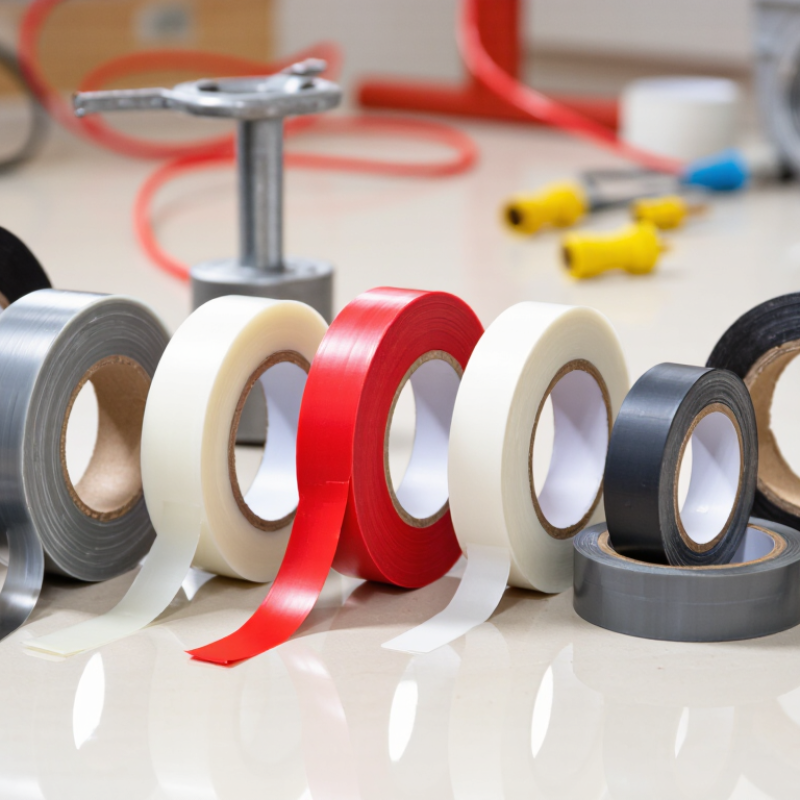
Definition and Key Properties of Heat-Resistant Waterproof Rubber Tape
Heat-resistant waterproof rubber tape is a flexible sealing material for demanding electrical, mechanical, and outdoor applications. It combines an elastic rubber layer with adhesive or self-fusing properties. When wrapped around a cable joint, the tape can conform to uneven surfaces and reduce moisture entry. Its main purpose is to block water, dust, and air. Heat resistance refers to its service range, not unlimited exposure. That distinction matters.
Key properties include dielectric strength, adhesion, elongation, and recovery. A reliable tape should stretch evenly without splitting or becoming brittle. It should remain stable near hot pipes, engine compartments, or outdoor enclosures.
Waterproof performance depends on compression, overlap, and surface preparation. Clean, dry surfaces usually produce better seals. In field work, I check the edges carefully. Small lifting areas can become leak paths.
Material selection still requires judgment. Some tapes resist heat well but lose flexibility in cold conditions. Others seal quickly but age faster under sunlight or chemical contact. Technical data should identify temperature limits, voltage ratings, and material compatibility. A simple trial on a spare section can reveal weak adhesion before installation. I would not treat one successful wrap as proof of long-term safety. Installation quality often matters as much as the tape itself.
Material Structures and Performance Differences Among Tape Types
Top 10 Types of Heat Resisting Waterproof Rubber Tape differ mainly by polymer structure, backing, and curing behavior. Silicone tape withstands about 200–260°C and remains flexible. Fluorosilicone improves fuel and chemical resistance. EPDM handles outdoor moisture and ozone, usually near 150°C. Butyl tape offers strong waterproof sealing but lower heat tolerance. Neoprene resists abrasion and weathering. Natural rubber provides high tack, yet ages faster. Acrylic adhesive supports long-term temperature exposure. Polyurethane balances flexibility and wear resistance. PVC tape is economical, but often performs below 80°C. Fiberglass-reinforced silicone tape adds dimensional stability near 260°C. The structure matters more than appearance.
ASTM D1000 evaluates pressure-sensitive electrical tapes for adhesion, tensile strength, elongation, and aging. UL 746C also emphasizes enclosure and insulation performance under environmental conditioning. A 2024 MarketsandMarkets report placed the industrial tapes market above USD 50 billion, with electrical and construction uses driving demand. However, market data does not prove field reliability. A thick silicone layer may seal well but stretch poorly. A thin butyl layer may conform better, yet soften near heat sources. The “best” tape depends on temperature, pressure, movement, and water exposure.
Tips: Check continuous and peak temperature separately. Measure the substrate temperature, not only air temperature. Overlap the tape by at least half its width. Clean oil, dust, and rust first. Test a small section for 24 hours. I would not trust a datasheet alone; installation quality can change performance dramatically. Some tapes also fail after repeated heating cycles, a detail that is easy to overlook.
Top 10 Types of Heat-Resistant Waterproof Rubber Tape
Heat-resistant waterproof rubber tape serves very different jobs, depending on temperature, moisture, movement, and surface condition. Silicone tape handles high heat and remains flexible around pipes, wires, and irregular joints. Self-fusing silicone tape bonds to itself without a separate adhesive layer. Fiberglass-reinforced silicone tape adds strength where rubbing or pressure may damage ordinary tape. EPDM rubber tape resists water, sunlight, and weathering, making it useful for outdoor seals. Butyl rubber tape stays soft and creates a strong moisture barrier on many building surfaces.
Neoprene rubber tape offers balanced resistance to water, abrasion, and moderate heat. Nitrile rubber tape performs well near oils, fuels, and machinery, although its heat limit must be checked carefully. Fluorosilicone tape suits demanding environments involving heat, chemicals, and changing temperatures. Rubber mastic tape fills small gaps and wraps uneven fittings, but it can feel messy during installation. Acrylic-backed rubber tape provides firm adhesion on clean, smooth surfaces, especially where long-term exposure matters.
In my experience, preparation decides more failures than the tape itself. I once applied tape over dusty insulation, and the edge lifted within days. Clean and dry the surface first. Stretch self-fusing tape evenly, but avoid excessive tension near sharp corners. Check the technical sheet for continuous and short-term temperature ratings. These values are not interchangeable. A tape may survive a brief heat spike but fail under constant exposure. Water pressure, ultraviolet light, vibration, and substrate compatibility also deserve testing. Small trial sections often reveal problems before a full repair.
Applications Across Industrial, Electrical, Automotive, and Construction Settings
Top 10 Types of Heat Resisting Waterproof Rubber Tape
Heat resisting waterproof rubber tapes serve different industrial needs. Silicone tape withstands high temperatures and seals irregular surfaces. Self-fusing silicone tape bonds without adhesive, making it useful for emergency pipe and cable repairs. EPDM tape resists weather, moisture, and ozone around outdoor equipment. Butyl rubber tape creates a flexible seal beneath panels, ducts, and metal joints. Fiberglass-reinforced silicone tape adds mechanical strength near hot pipes and machinery.
Electrical technicians often use self-fusing silicone, PVC-coated rubber, and high-temperature electrical tapes around cable splices and terminals. Silicone tape remains flexible during thermal cycling. However, it should not replace certified insulation systems without checking voltage and temperature ratings. In industrial plants, foil-backed butyl tape can seal ventilation joints, while acrylic adhesive tape suits smoother, cleaner surfaces. Field conditions are rarely perfect.
Automotive applications include silicone tape around hoses, ignition wires, and exposed connectors. EPDM tape performs well near rain, road spray, and engine-bay heat, although direct contact with fuel requires careful material selection. Construction crews use butyl, neoprene, and reinforced rubber tapes for roofing seams, window flashing, pipe penetrations, and expansion joints. Surface preparation matters greatly. Dust can ruin adhesion.
A useful inspection includes temperature range, waterproof rating, substrate compatibility, and expected movement. One common mistake is trusting the word “heat-resistant” without reading the technical sheet. Tape may survive heat yet fail under pressure, vibration, or chemicals. Small test sections prevent expensive rework.
Selection Criteria, Installation Methods, and Safety Considerations
Top 10 Types of Heat Resisting Waterproof Rubber Tape
Choosing heat resisting waterproof rubber tape starts with the service environment. Compare silicone, self-fusing silicone, EPDM, butyl, fiberglass-silicone, and fluoropolymer-backed options. Check continuous temperature, short-term peak temperature, tensile strength, elongation, dielectric rating, and water absorption. ASTM D1000 provides common test methods for pressure-sensitive electrical tapes, but test results are not interchangeable. A tape rated for 180°C may still fail under steam, oil, vibration, or sharp edges. The substrate matters too. Clean metal, glass, and cured insulation usually provide better adhesion than dusty plastic.
Installation requires controlled preparation. Remove grease, moisture, rust, and loose coating. Round sharp corners before wrapping. Apply steady tension, with each layer overlapping by about half its width. Self-fusing tape needs firm stretching and direct contact between layers. Do not stretch adhesive-backed tape excessively. Leave no channels where water can collect. A field inspection after 24 hours is sensible, although often skipped. That shortcut deserves reconsideration.
Tips: Use a calibrated infrared thermometer and record the surface temperature before selection. Allow extra margin above the expected operating temperature. The U.S. Bureau of Labor Statistics reported about 2.6 million nonfatal private-industry injuries in 2023, reinforcing the need for documented work controls. Follow the tape’s safety data sheet, wear heat-resistant gloves, and isolate energized equipment before installation. NIOSH heat-stress guidance also supports planned breaks, hydration, and worker acclimatization near hot surfaces. Never treat waterproofing as electrical protection unless the product has a verified electrical rating. A neat wrap is not proof of a safe installation.
Top 10 Types of Heat-Resistant Waterproof Rubber Tape
Comparison of representative upper continuous service-temperature ratings for common rubber tape materials. Actual limits vary by formulation, thickness, pressure, exposure time, and manufacturer specifications.
Selection criteria: Choose the tape according to continuous and peak temperature, water or chemical exposure, required elongation, electrical insulation needs, substrate compatibility, and expected outdoor or UV exposure.
Installation method: Clean and dry the surface, remove oils and oxidation, stretch self-fusing tape evenly, overlap each wrap by approximately 50%, and finish with several relaxed layers. Press the final wrap firmly to improve bonding and sealing.
Safety considerations: Do not exceed the verified service-temperature rating. Use suitable gloves and eye protection, avoid wrapping energized equipment unless the tape is specifically rated for that application, and follow the product safety data sheet and local electrical codes.