
Choosing a reliable fertilizer supplier requires more than comparing prices. Ammonium Nitrate Sulphate combines nitrogen and sulfur, nutrients that can support crop growth when soil conditions and local recommendations call for them. Yet product quality, availability, delivery schedules, and documentation can differ between suppliers. Small details matter. A clear product specification and a current analysis certificate can help buyers assess what they are purchasing. Local agronomic advice matters, too, because crop needs and soil conditions vary.
This overview of China’s top 10 suppliers offers a starting point for research, not a fixed ranking or an endorsement. Supplier capabilities can change, and public information may not tell the whole story. Buyers should verify company credentials, product specifications, quality-control records, export experience, and applicable safety and transport requirements directly. Ask about order volumes and delivery terms before making comparisons. Keep the questions practical. A polished website alone is not proof of dependable supply. No list is perfect; some useful details may be difficult to confirm independently. Treat this guide as a shortlist, then check each supplier against your region’s regulations, procurement needs, and advice from qualified agricultural professionals.
Ammonium nitrate sulphate is a granular fertilizer that supplies nitrogen and sulfur in one application. Nitrogen supports leafy growth, while sulfur helps plants make proteins. In commonly sold grades, it may contain about 26% nitrogen and 13% sulfur, though the analysis varies. Nitrate nitrogen is readily available to roots; ammonium and sulfate provide additional nutrient forms. The granules can be spread across fields or applied during crop growth. They are not a cure-all.
It is used on crops such as wheat, maize, oilseed rape, and pasture, especially where soil tests indicate a need for both nutrients. A FAO report, World Fertilizer Trends and Outlook to 2025, projected global use of nitrogen, phosphate, and potash nutrients at 200.5 million tonnes in 2025. That figure describes the wider fertilizer market, not ammonium nitrate sulphate specifically. Application rates should follow soil and crop requirements; excess nitrogen can be wasted or harm water quality. Check the product grade and local agronomic guidance. Soil tests matter. Sulfur deficiency can be easy to overlook, but adding sulfur without evidence may also be unnecessary.
China’s ammonium nitrate sulphate industry serves agricultural demand for nitrogen and sulphur in a single fertilizer. The product is used where crops need both nutrients, though suitability depends on soil conditions and local recommendations. Production generally combines nitrogen-bearing materials with sulphate sources, followed by granulation, drying, and quality checks. Exact formulations and particle sizes vary among suppliers.
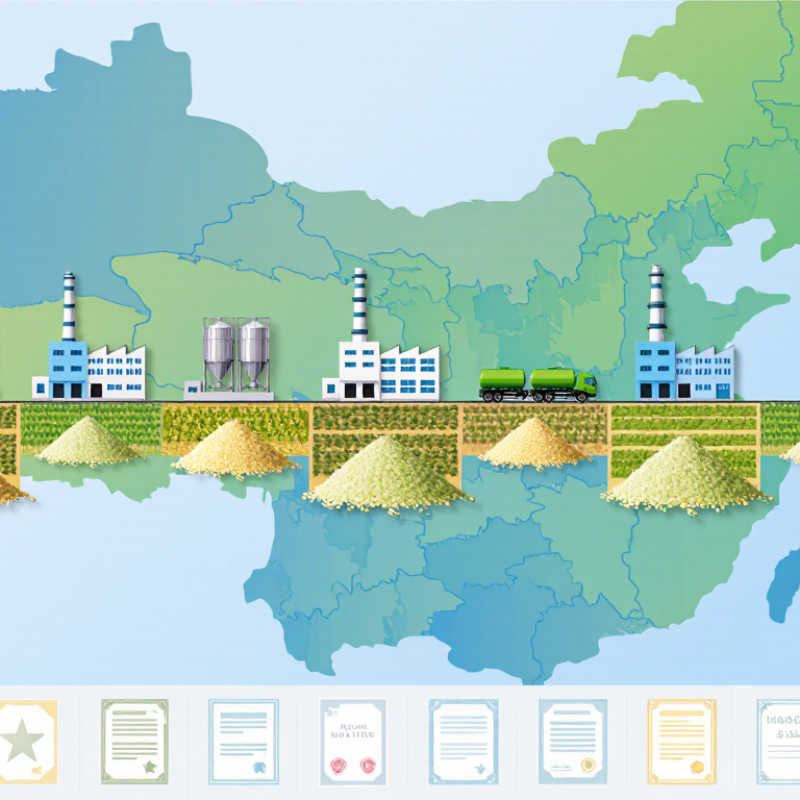
The supply landscape includes large-scale fertilizer producers and regional manufacturers. Output, transport access, feedstock prices, and seasonal demand can all affect availability. For buyers, a supplier list alone says little. Product specifications, batch consistency, certificates of analysis, and clear shipment terms offer more useful evidence. Small details matter. Granule size, moisture, and nutrient content can influence storage and field application.
China’s market also reflects wider changes in farming, including demand for efficient nutrient management and more precise application. Importers should confirm that product documentation matches the goods received and check applicable destination-market requirements. Independent testing may help when specifications are critical. Still, paperwork is not a perfect substitute for consistent production, and that distinction deserves more attention. Soil testing and agronomic advice remain important before choosing a fertilizer.
When evaluating ammonium nitrate sulphate suppliers in China, look beyond quoted prices. Request a current specification sheet showing nitrogen and sulphur content, moisture, particle size, and stated impurity limits. Compare these figures with your agronomic requirements and local product rules. Details matter. Ask for batch-specific test reports, not only a general product brochure. Where practical, arrange independent laboratory testing on a representative sample before placing a large order. Check that safety data sheets and export documents are complete and consistent with the product being offered.
Assess how the supplier manages production consistency and communication.
Ask how batches are identified, how quality complaints are investigated, and whether production capacity matches your required schedule. A remote or in-person audit can help verify storage conditions, testing procedures, and traceability records. A polished certificate is useful, but it cannot answer every question.
Confirm packaging, moisture protection, transport arrangements, and compliance responsibilities with qualified logistics partners. These checks take time. Still, a low offer may become costly if specifications, delivery dates, or documentation change after payment. No checklist catches everything, so record agreed specifications and tolerances in the purchase contract.
Profiles of ten Chinese ammonium nitrate sulphate suppliers are most useful when they show verifiable production capabilities, not just sales claims. FAOSTAT’s Fertilizers by Nutrient dataset puts global fertilizer use at about 185.7 million tonnes of nutrients in 2022. That scale makes clear product declarations matter. Buyers should check nitrogen and sulphur content, granule size, moisture limits, and batch certificates.
Each profile can compare a different practical point: manufacturing experience, granulation consistency, quality controls, export documentation, packaging options, production capacity, delivery planning, technical support, sample testing, and traceability. Ask for recent test results and confirm that the stated specifications match the shipment documents. A clear photograph of uniform granules helps, but it cannot replace laboratory analysis.
Use the profiles to distinguish documented strengths from unanswered questions. Some suppliers may offer strong technical records but limited customization; others may respond quickly while providing sparse batch data. That trade-off deserves attention. A polished brochure is not proof. Independent testing and direct factory checks can help, though they take time and add cost. FAOSTAT, Fertilizers by Nutrient, provides broad market context, not supplier-level verification.
A commonly marketed grade contains 26% nitrogen and 13% sulfur by mass. Actual specifications vary by product; this chart is a general product benchmark, not a comparison or ranking of suppliers.
When comparing China’s ammonium nitrate sulphate suppliers, capacity figures need context. Annual output on a brochure may not equal available export volume. Ask how much can be allocated monthly and whether production changes during peak planting seasons. Small detail, big difference. Request recent shipment records, typical lot size, lead time, and a written explanation of seasonal limits. A supplier with steady batches can be easier to plan around than one quoting the largest headline capacity.
Quality checks should match the buyer’s specification, not just a generic certificate. Review nutrient analysis, moisture, particle size, and batch-to-batch variation. Ask for a current certificate of analysis and confirm whether an independent laboratory can test a retained sample. Numbers matter. Packaging matters too: inspect bag strength, liner sealing, labels, and pallet condition through sample photos or a pre-shipment inspection. Comparisons are rarely perfect; test methods and reporting dates may differ.
Export service is part of product reliability. Check port options, container or bulk handling, document accuracy, and response times when schedules shift. Clarify how the supplier manages storage and transport requirements under applicable rules. A low price can lose its appeal after delays, damaged bags, or corrected paperwork. Supplier rankings can change, and public capacity data may lag, so verify current details directly.
Supplier-specific capacities and certifications should be verified directly. The comparison below provides ten practical criteria without inventing company-level data or rankings.
| No. | Comparison Dimension | What to Compare | Evidence to Request |
|---|---|---|---|
| 1 | Production Capacity | Annual nameplate capacity, current operating rate, and volume available for export. Capacity is supplier-specific and should not be assumed from general market information. | Recent production records, audit evidence, and a written confirmation of available shipment volume. |
| 2 | Product Composition | Guaranteed nitrogen and sulfur contents, moisture, particle-size distribution, and any applicable tolerances. Specifications can vary by product and producer. | Current technical data sheet and batch-specific certificate of analysis (COA). |
| 3 | Quality Management | Documented quality controls, batch traceability, inspection procedures, and corrective-action processes. | Quality manual or audit summary; verify the scope and validity of any claimed ISO 9001 certification with its issuer. |
| 4 | Testing and Inspection | Whether testing is conducted in-house or by an independent laboratory, and whether results are linked to each shipment batch. | Sample COA, test methods, and agreed pre-shipment inspection arrangements. |
| 5 | Packaging Options | Available bag sizes or bulk loading, moisture protection, palletizing options, and suitability for the destination’s handling system. | Packaging specification, photographs or samples, and confirmation of net weight and marking requirements. |
| 6 | Export Documentation | Ability to prepare the documents required for the transaction and destination, such as a commercial invoice, packing list, certificate of origin, and transport documents. | A destination-specific document checklist and confirmation of who issues each document. |
| 7 | Safety and Transport Compliance | Correct product classification, handling instructions, and compliance with applicable export, carrier, and destination rules. Classification depends on the product and shipment details. | Current safety data sheet (SDS) and written confirmation of transport arrangements based on the applicable classification. |
| 8 | Shipping and Lead Time | Production lead time, port of loading, shipment frequency, and proposed Incoterms® rule. Transit time depends on route, carrier, and port conditions. | Recent shipment references, a shipment schedule, and a quotation stating the Incoterms® rule and named place or port. |
| 9 | Order Flexibility | Minimum order quantity, trial-order availability, and ability to meet the buyer’s required packaging and shipment schedule. | Written quotation showing quantity limits, production slot, packing terms, and order validity. |
| 10 | Commercial and After-Sales Support | Payment terms, response time, claims procedure, and support for quality or shipping issues. | Written sales terms, a documented claims process, and references that can be checked independently. |
| Cookie | Duration | Description |
|---|---|---|
| cookielawinfo-checkbox-analytics | 11 months | This cookie is set by GDPR Cookie Consent plugin. The cookie is used to store the user consent for the cookies in the category "Analytics". |
| cookielawinfo-checkbox-functional | 11 months | The cookie is set by GDPR cookie consent to record the user consent for the cookies in the category "Functional". |
| cookielawinfo-checkbox-necessary | 11 months | This cookie is set by GDPR Cookie Consent plugin. The cookies is used to store the user consent for the cookies in the category "Necessary". |
| cookielawinfo-checkbox-others | 11 months | This cookie is set by GDPR Cookie Consent plugin. The cookie is used to store the user consent for the cookies in the category "Other. |
| cookielawinfo-checkbox-performance | 11 months | This cookie is set by GDPR Cookie Consent plugin. The cookie is used to store the user consent for the cookies in the category "Performance". |
| viewed_cookie_policy | 11 months | The cookie is set by the GDPR Cookie Consent plugin and is used to store whether or not user has consented to the use of cookies. It does not store any personal data. |
