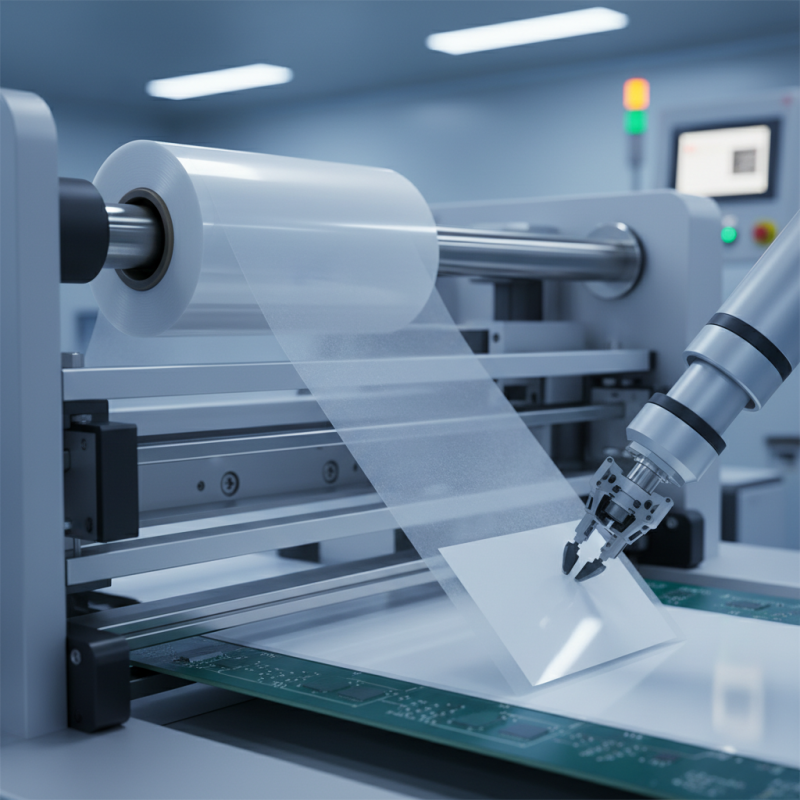
What is PET Release Film and How is it Used?
PET Release Film plays a crucial role in many industries, from packaging to electronics. According to Dr. Emily Wright, a leading expert in polymer materials, "PET Release Film revolutionizes how we handle adhesive applications." This statement reflects the significant impact of this material.
In the production process, PET Release Film provides a smooth surface for adhesives, ensuring efficient performance. Its unique properties allow for easy peeling, which is essential for labels and stickers. This film prevents undesired sticking during manufacturing, enhancing overall productivity.
Despite its advantages, there are challenges in sourcing high-quality PET Release Film. Some manufacturers might compromise on quality to cut costs. This could affect the product's reliability and performance. Continuous improvement and careful selection of suppliers are vital to maintain standards in this industry.
Definition and Characteristics of PET Release Film
PET release film, short for polyethylene terephthalate, is a unique material used primarily in various adhesive applications. This film exhibits distinct properties that make it a preferred choice for industries requiring reliable release mechanisms. Its smooth surface allows for easy peeling, which is crucial when working with adhesives and coatings. This quality ensures that products remain intact while maintaining functionality.
Characteristics of PET release film include excellent dimensional stability and high strength. These characteristics are essential for applications that demand durability during processing and storage. The material is also resistant to moisture and chemicals, contributing to its versatility. Additionally, PET release film can be engineered for specialized tasks, such as printing or laminating, expanding its functional range. However, achieving the right balance of properties sometimes involves complex manufacturing processes. This can lead to challenges in quality control.
Despite its benefits, there are areas for improvement. Recyclability remains a key concern. While PET is recyclable, the production of release films involves additional layers that complicate this process. As industries shift toward sustainable practices, addressing these gaps is essential. Striking a balance between performance and environmental impact presents ongoing challenges in the development of PET release films.
Common Applications of PET Release Film in Various Industries
PET release film is widely used across several industries due to its unique properties. One major application is in the adhesive sector. This film acts as a protective layer, preventing adhesion during manufacturing. This is crucial for maintaining quality and ensuring the optimal performance of adhesives.
Another common application is in the composite manufacturing industry. Here, PET release films are employed to enable easy release of the final product from molds. This significantly enhances the efficiency of production processes. In the electronics sector, this film protects sensitive components during handling and shipping. It minimizes the risk of contamination, ensuring the integrity of delicate devices.
Despite its many benefits, some challenges remain. Not all PET films provide the same level of release performance. Selecting the right film for specific applications requires careful consideration. Users must ensure compatibility with coatings or adhesives. This part of the process can often lead to trial and error, highlighting a need for expertise. As industries evolve, the demand for more specialized PET release films grows.
The Manufacturing Process of PET Release Film
The manufacturing process of PET release film begins with the selection of high-quality polyester resin. This resin is melted and extruded into thin sheets. The extrusion process is crucial as it determines the film’s thickness, which typically ranges from 25 to 100 microns. Industry standards indicate that films under 50 microns are ideal for delicate applications, while thicker films are better suited for heavy-duty purposes.
Next, the film undergoes a cooling process. The cooling phase is vital to stabilizing the film’s properties. Once cooled, the film is treated to enhance its release characteristics. This may involve applying a silicone coating or other chemical treatments. According to industry reports, the global PET release films market is projected to reach $2.1 billion by 2025, highlighting the demand for high-quality films in various sectors.
Moreover, quality control is essential throughout the manufacturing process. Regular testing ensures that the film meets the necessary release strength and clarity standards. However, some manufacturers face challenges in maintaining consistent quality, leading to varying performance. Addressing these issues is paramount for manufacturers striving for excellence in production.
Benefits of Using PET Release Film for Packaging and Adhesives
PET release film is increasingly favored in packaging and adhesives due to its unique properties. Its non-stick surface enhances the efficiency of product assembly. According to a recent market report, the global PET release film market is projected to grow at a CAGR of 5.6% from 2022 to 2029. This reflects its rising demand across various industries, including automotive and consumer goods.
One major benefit of PET release film is its excellent dimensional stability. It maintains shape and structure during processing, ensuring reliable performance. Moreover, its chemical resistance makes it suitable for harsh environments. This versatility allows manufacturers to streamline production while reducing waste. Studies show that using PET film can lower manufacturing costs by up to 20%. However, some industry experts raise concerns about its recyclability. As sustainability becomes a primary focus, finding alternatives is crucial.
The clarity of PET release film also plays a significant role in customer satisfaction. Clear packaging showcases the quality of the product, enhancing consumer trust. Although challenges remain, such as potential adhesive residue left behind, improvements in formulation are being explored. Balancing performance with environmental impact is essential for future developments in this field.
Key Differences Between PET Release Film and Other Release Films
PET release film is a specialized material widely used in various industries for its unique properties. Its surface is engineered to provide excellent release characteristics, making it an ideal choice for applications such as laminating, adhesive films, and more. Many professionals appreciate its durability and heat resistance. However, understanding the differences between PET release film and other types of release films is essential for making informed choices.
One key distinction is the material composition. Unlike silicone or parchment release films, PET offers excellent dimensional stability and resistance to tearing. It does not degrade easily in high temperatures, maintaining reliability in demanding environments. This makes it preferable for applications where a precise finish is required. Additionally, while other films may be cheaper, they often compromise on quality.
Some users might find the performance of PET release films to vary based on specific production processes. Despite its many strengths, users must evaluate how it fits within their production needs. For instance, during lamination, improper handling can lead to defects in the final product. In conclusion, while PET release film stands out for its qualities, it's essential to consider both performance and user experience for optimal results.