7 Debris Bag Buying Tips for Global Buyers
Buying a Debris Bag for international projects involves more than comparing prices and printed specifications. A bag that looks strong in a product photo may fail when filled with broken concrete, wet soil, or sharp timber. Global buyers need to examine fabric weight, lifting loops, seam construction, filling capacity, and discharge options before placing an order. Small details matter. A poorly positioned loop can make crane handling unsafe. Weak stitching can cause costly leakage during transport.
This guide shares practical buying considerations based on common construction and waste-handling requirements. It focuses on product performance, supplier reliability, quality control, and clear communication across markets. Buyers should request samples, inspect seams by hand, and confirm whether the stated safe working load matches the intended application. Certification documents can support confidence, but they should not replace physical inspection or independent verification when risk is significant. No checklist is perfect. Even experienced purchasers can overlook moisture exposure, storage conditions, or inconsistent batch quality. That is why written specifications, pre-shipment inspections, and traceable production records remain valuable. The right Debris Bag should fit the material, handling method, project environment, and local waste-management expectations. A cheaper option may become expensive after one torn shipment. Careful questions usually prevent avoidable surprises.
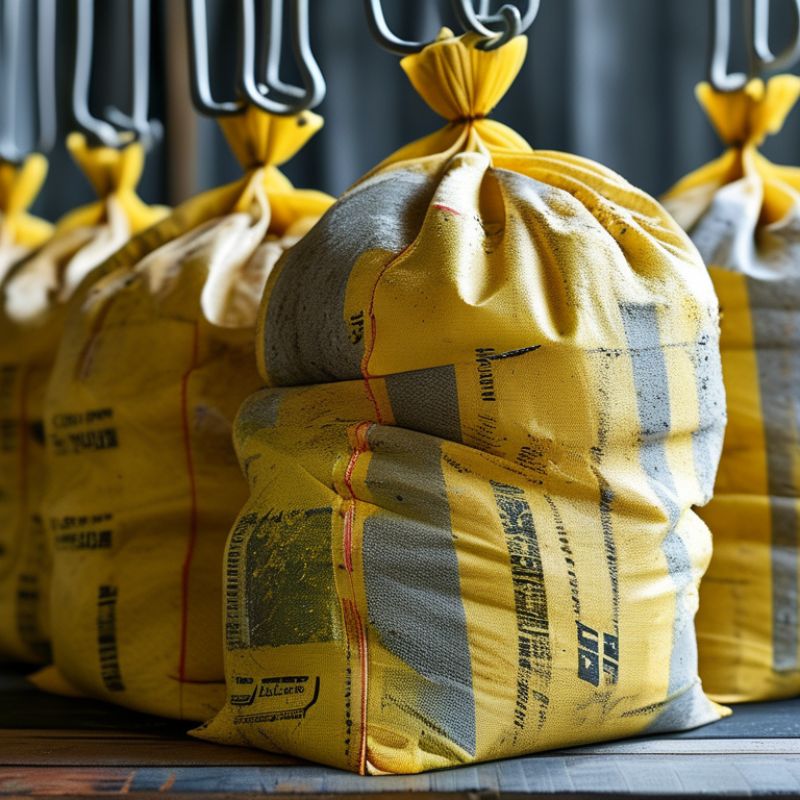
Define Debris Type and Safe Working Load Under ISO 21898:2004
When global buyers compare debris bags, the material inside should guide the purchase. ISO 21898:2004 addresses flexible intermediate bulk containers for non-dangerous goods. It emphasizes construction, testing, and safe handling. Do not treat every site waste stream as identical. Broken concrete creates abrasion and concentrated loads. Damp soil adds weight. Fine dust may escape through unsuitable fabric or seams. Mixed debris may require a liner or coated fabric.
Define the debris type before requesting quotations. Record particle size, moisture, sharp edges, density, filling method, and discharge needs. Then identify the safe working load, or SWL, in kilograms. SWL is not the bag’s maximum visual capacity. It depends on tested construction, lifting configuration, and handling conditions. Check the test basis, safety factor, lifting loops, and intended service life. Ask for inspection records and clear handling instructions. These details provide practical evidence of supplier reliability.
Experienced procurement teams often see buyers select bags by volume alone. That assumption can be wrong. A bag that looks half full may exceed its SWL when wet. Keep a margin for uncertain density, and never ignore uneven loading. Do not guess. ISO 21898:2004 is a useful reference, not a substitute for site risk assessment or current local requirements. Recheck the specification whenever the debris changes. Small omissions matter.
Select 500–2,000 kg Capacity Bags for Different Debris Loads
Global buyers should match debris bags to the actual load, not just the advertised volume. A 500 kg bag suits light demolition waste, dry timber, packaging, and small masonry pieces. A 1,000 kg bag handles mixed rubble from moderate site work. For dense concrete, stone, or wet soil, a 2,000 kg model may be more suitable, but only when lifting equipment supports that weight.
Start with an honest load estimate. Weigh a typical batch when possible. Then leave a safety margin of at least 10–20 percent. Overfilled bags can strain seams, lifting loops, and handling equipment. Check the safe working load, bag dimensions, fabric strength, and stitching quality. Four reinforced loops should remain accessible after filling. That detail matters.
Do not choose capacity by size alone. A wide, shallow bag may load differently from a tall, narrow one. Confirm whether the rated capacity applies to loose debris or compacted material. Ask for inspection records and material specifications before ordering large quantities. Moisture changes weight quickly. Wet soil can surprise even experienced crews. I have seen tidy calculations fail when rain entered the work area. The better choice is often a smaller bag used within its limits, rather than a larger bag filled carelessly. Consider storage space, pallet quantities, local lifting limits, and disposal-site requirements before final purchase.
Check 5:1 or 6:1 Safety Factors for Lifting and Reuse
7 Debris Bag Buying Tips for Global Buyers
Check the safety factor before comparing price, fabric weight, or delivery time. A 5:1 rating means the bag’s minimum breaking strength is five times its rated lifting capacity. A 6:1 rating provides a higher margin for repeated handling and controlled reuse. It does not make an overloaded bag safe.
Ask for the safe working load, test report, and traceable production details. Confirm whether the rating covers the complete bag, including lifting loops, seams, and discharge points. On a busy site, sharp concrete can cut woven fabric quickly. Dust, moisture, ultraviolet exposure, and forklift contact can also weaken it. Small damage matters. Inspect every loop, seam, and corner before lifting. Do not reuse a bag with stretched loops, broken stitching, heavy abrasion, chemical staining, or permanent deformation.
Reuse must be clearly permitted for the bag’s design and service conditions. A buyer should request written inspection guidance, cleaning limits, storage instructions, and recommended inspection intervals. The 6:1 option may suit demanding cycles, but it cannot replace careful handling. This is where purchasing decisions sometimes go wrong: buyers focus on the printed ratio and overlook real site conditions. Use trained personnel, keep loads within the marked capacity, and lift only from approved points. A clear label helps. It is not enough alone.
Match Fabric and UV Resistance with ASTM G154 Testing
Global buyers should match debris-bag fabric with measured UV exposure, not supplier claims alone. Polypropylene may suit short projects, while coated polyester often offers better dimensional stability outdoors. The choice depends on sunlight, moisture, loading, and storage time.
ASTM G154 provides a practical comparison method. In a common cycle, specimens receive eight hours of UVA-340 exposure at about 60°C. They then undergo four hours of condensation near 50°C. Measure tensile strength, elongation, seam strength, and color change before and after testing.
Ask suppliers for original and aged results. A bag can still look acceptable while its lifting loops become brittle.
That detail matters.
The World Health Organization’s Global Solar UV Index identifies UV Index 3 as the point where protection becomes necessary. High-altitude sites, pale surfaces, and tropical ports can create harsher exposure than a warehouse test suggests. Therefore, a buyer should specify the expected outdoor duration and local UV conditions.
Request UV stabilizer details, fabric weight, coating type, and test-cycle duration. ASTM G154 does not provide a universal service-life guarantee. This is often misunderstood.
I would also test production samples, not only laboratory swatches. Packing pressure, folded edges, and wet debris can accelerate damage.
One weakness remains: accelerated exposure cannot perfectly copy every climate. Use the data as a comparison tool, then confirm performance through field trials.