
Choosing a Swab Stick Packaging Tube is not just a matter of finding a container that fits. The tube should protect the stick, support clean handling, and suit the way the product is stored and shipped. A loose cap, cramped interior, or rough opening can turn a simple task into a frustrating one. Small details matter.
Start with the swab’s length, handle shape, and tip material. Check the tube’s inner dimensions, wall strength, closure, and ease of opening. If users need to remove one stick quickly, test the cap with clean gloves and ordinary handling motions. Fit comes first. Then consider the packaging material and whether it works with the product, filling process, and intended storage conditions. Do not assume that a tube is sterile or protective simply because it looks sealed; confirm any required performance through supplier documentation and suitable testing.
A good choice also makes labeling and inventory easier. Look for enough flat space for clear product details, batch identification, and handling instructions. Ask suppliers about material specifications, manufacturing controls, and consistency between production runs. A sample tube is useful, but one quick check is not enough. Test representative units, including the closure and the swab’s removal, before placing a larger order. There may be trade-offs: a thicker tube can feel sturdier but add bulk, while a compact design may save space and feel less forgiving. The best Swab Stick Packaging Tube is the one that balances protection, usability, compatibility, and reliable supply for its actual use.
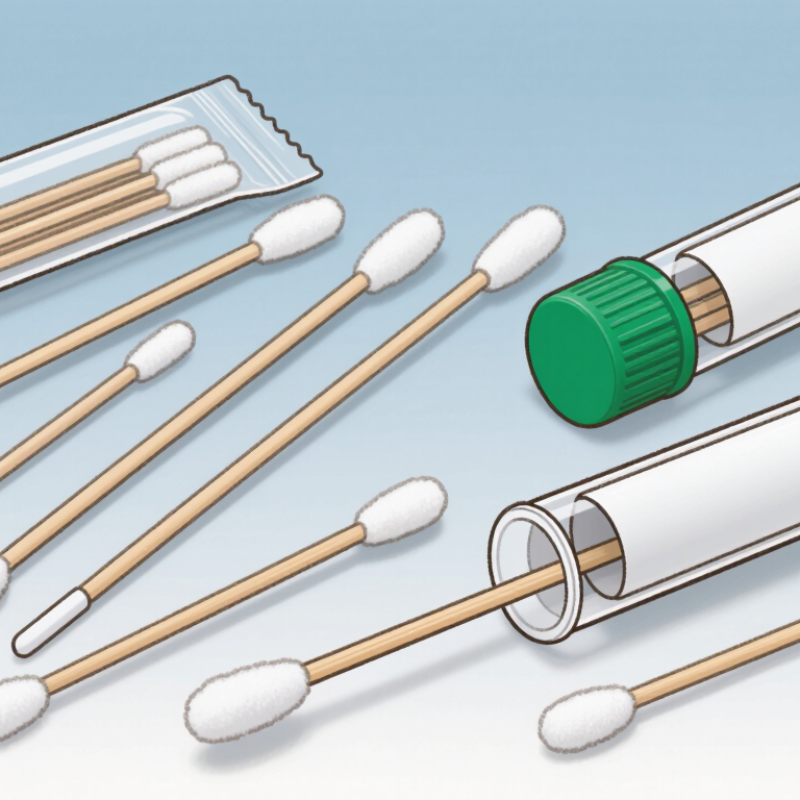
A swab stick packaging tube gives the swab a defined, protected space between production and use. It can reduce contact with dust, handling, and splashes, especially when the cap fits securely. The tube also helps keep the stick straight, so a bent shaft or crushed tip is less likely during storage and transport. Small details matter. A tube alone does not guarantee sterility or a moisture barrier; those depend on the material, closure, and validated packaging process. Check the supplier’s specifications rather than relying on appearance.
The tube should match the swab’s full length and tip shape without squeezing the head. Too much room can let the swab slide and strike the cap. Too little can make removal awkward or damage delicate fibers. Fit comes first. In practice, test a sample by opening it with clean hands and checking whether the swab comes out smoothly. Look for sharp edges, loose caps, and labels that remain readable after routine handling. A tube can look sturdy and still be frustrating to use. That is easy to miss during a quick inspection, so test the actual packaging with the people who will handle it.
Measure the swab before selecting its tube.
Record total length, shaft diameter, tip width, and the cap’s usable internal depth. A 150 mm swab needs more than 150 mm of internal tube length, with extra clearance so the tip is not compressed. Check the tube’s inner diameter against the widest part of the swab, not just its shaft.
Fit matters. A tight cap can bend a flocked tip; an oversized tube can let it rattle during transit. CDC specimen-collection guidance favors synthetic-fiber swabs with plastic shafts for many molecular tests, because some materials can interfere with testing. Confirm compatibility with the receiving laboratory’s method.
Also check whether the swab must remain dry or sit in transport medium. A tube designed for a dry swab may leak or leave too little space when filled. Test the actual swab, cap, and medium together, then inspect for tip contact, bending, and leakage.
ISTA 3A is a distribution-testing protocol for parcel shipments up to 70 kg; it can help assess shipping performance, but it does not establish swab fit. ISO 11607-1 addresses sterile-barrier packaging requirements when applicable.
One detail is easy to miss: nominal tube length may differ from usable internal length. Measure both.
How to Choose the Best Swab Stick Packaging Tube
Comparing Tube Materials, Closures, and Protective Features
A tube’s material affects visibility, durability, and moisture resistance. Clear PET makes it easy to inspect a swab without opening the package. Polypropylene is lightweight and resists routine handling, while paper-based tubes can reduce plastic use but may need an inner barrier. Match the material to storage conditions and shipping distance. A tube that looks sturdy on a desk may bend inside a crowded carton. Small details matter.
Closures should stay secure during transport yet open without crushing the stick. Snap caps are quick to use, while screw caps can provide a firmer hold. Check that the cap fits evenly and does not loosen after repeated handling. For extra protection, consider a tamper-evident seal, a fitted insert, or a moisture barrier. These features help limit dust, movement, and exposure, but they cannot compensate for poor sizing. Not every tube fits.
Tips: Test a filled sample through packing, shipping, and opening. Listen for rattling, inspect the tip, and check whether the cap stays seated. Compare several tube sizes before ordering in volume. I once overlooked a slightly narrow opening; loading took longer than expected. That small flaw changed the whole workflow.
How to Choose the Best Swab Stick Packaging Tube
A swab tube must protect the collection end from contact, moisture, and handling during storage and transport. Looks clean. Not enough. Sterility depends on a validated process and intact packaging, not appearance alone. Check whether the supplier can provide relevant sterilization records, lot traceability, and shelf-life information. Requirements vary by intended use and market, so confirm applicable standards with your quality team rather than relying on a generic claim. This detail is easy to miss.
Packaging performance matters at the point of use. The tube should fit the swab without bending it, and the cap should stay secure during transport. Yet an over-tight cap can be difficult to open with gloved hands. A loose one may compromise protection. Test samples under realistic conditions, including routine opening, storage, and shipping. Look for cracked walls, weak seals, or a cap that touches the swab tip. Real handling is messy, and a package that performs well on a clean bench may behave differently in a busy clinic. Record those observations before approving a design.
| Packaging option | Typical material | Sterility considerations | Protection and usability | Compliance and validation checks | Best suited for |
|---|---|---|---|---|---|
| Rigid tube with snap cap | Polypropylene (PP) or high-density polyethylene (HDPE) | The tube and closure do not establish sterility by themselves. Confirm the sterilization method and validate the complete packaging system. | Good protection against bending and handling damage. Check cap retention, fit, and ease of opening. | Assess material compatibility, seal or closure integrity, labeling, and the intended sterilization process. For terminally sterilized devices, evaluate applicable ISO 11607 requirements. | Swabs needing rigid mechanical protection or a reusable-style collection tube. |
| Tube with screw cap | PP or HDPE; cap may use a compatible polymer or liner | A screw closure can reduce accidental opening, but it is not automatically a validated sterile barrier. Verify closure performance after sterilization and distribution testing. | Can provide secure closure and containment. Threads may take longer to open and can be harder to handle with gloves. | Check thread engagement, cap torque or opening force, leakage risk where relevant, and any effect of sterilization on the polymer or liner. | Applications where secure closure or specimen containment is important. |
| Tube inside a peel pouch | Rigid PP or HDPE tube with a validated medical packaging pouch, often a paper/polymer or polymer-film construction | The pouch may serve as the sterile barrier when designed and validated for the device and sterilization method. The inner tube can protect the swab but should not be assumed to maintain sterility on its own. | Combines tube protection with a peel-open presentation. Pouch size and opening design affect handling and aseptic presentation. | Evaluate seal strength, package integrity, aging, transport, and sterilization compatibility under applicable ISO 11607 requirements. | Individually supplied sterile swabs that need both physical protection and a peel-open sterile barrier. |
| Barrier-film tube or sleeve | Flexible polymer film or a multilayer film structure | Barrier and sterility performance depend on the film structure, seals, and validated process. Film alone does not prove sterility or shelf life. | Lightweight and space-efficient, but offers less crush protection than a rigid tube. Assess puncture and abrasion risks from the swab tip. | Verify film specifications, seal integrity, compatibility with sterilization, and protection through distribution and storage. | Lightweight swabs where compact packaging is preferred and rigid protection is not essential. |
| Tube with desiccant or absorbent insert | PP or HDPE tube with an application-specific insert | An insert does not replace a sterile barrier. Confirm that it is suitable for the intended use and does not compromise the packaging system or swab. | May help manage moisture or collect liquid when the product design requires it. Insert placement and retention need testing. | Assess chemical compatibility, particle shedding, extractables or leachables where relevant, and the effect on sterilization and shelf life. | Products with a documented moisture-control or liquid-collection requirement. |
Selection note: Ratings and descriptions are general design considerations, not certification claims. Confirm the exact material, dimensions, sterilization method, intended use, and applicable regulatory requirements with the packaging supplier. For sterile products, validate the complete package system, including seals or closures, labeling, aging, and distribution performance.
Selecting a Tube Based on Use, Cost, and Supply Needs
Choose a tube around the swab’s length, fragility, and handling conditions. A snug fit limits movement, while a cap that opens cleanly helps users avoid touching the swab. For sensitive applications, ask suppliers for details on sealing, cleanliness controls, and batch traceability. Compare total cost, not just the unit price: include shipping, storage space, and damage or rework. Fit matters. OECD’s 2022 Global Plastics Outlook estimates that packaging accounts for 40% of plastic waste. That figure is a reason to review material use, not to sacrifice protection for a lighter tube.
Tips: Test samples with the actual swab and packing process. Check cap fit after transport simulation, and confirm lead times, minimum order quantities, and backup supply options before choosing.
A standard tube may cost less and be easier to replenish, but it can waste space if the swab is much shorter. A custom size may reduce excess material, yet bring higher tooling costs or longer lead times. The best balance depends on order volume and how predictable demand is. One detail that is easy to overlook: a small change in tube dimensions can affect case count and freight cost. Review those numbers with the supplier; estimates can miss real packing constraints.
| Cookie | Duration | Description |
|---|---|---|
| cookielawinfo-checkbox-analytics | 11 months | This cookie is set by GDPR Cookie Consent plugin. The cookie is used to store the user consent for the cookies in the category "Analytics". |
| cookielawinfo-checkbox-functional | 11 months | The cookie is set by GDPR cookie consent to record the user consent for the cookies in the category "Functional". |
| cookielawinfo-checkbox-necessary | 11 months | This cookie is set by GDPR Cookie Consent plugin. The cookies is used to store the user consent for the cookies in the category "Necessary". |
| cookielawinfo-checkbox-others | 11 months | This cookie is set by GDPR Cookie Consent plugin. The cookie is used to store the user consent for the cookies in the category "Other. |
| cookielawinfo-checkbox-performance | 11 months | This cookie is set by GDPR Cookie Consent plugin. The cookie is used to store the user consent for the cookies in the category "Performance". |
| viewed_cookie_policy | 11 months | The cookie is set by the GDPR Cookie Consent plugin and is used to store whether or not user has consented to the use of cookies. It does not store any personal data. |
