How to Choose Food Boxes for Global Shipping?
Choosing Food Boxes for global shipping requires more than selecting attractive cartons. The right design must protect food from crushing, moisture, temperature changes, vibration, and long handling cycles. A box that performs well in a local warehouse may fail after weeks at sea.
Dr. Gordon L. Robertson, author of Food Packaging: Principles and Practice, stated, “Packaging is a coordinated system of preparing goods for transport, distribution, storage, retailing, and use.” This principle remains practical today. Food Boxes should match the product, route, climate, and delivery method. Fresh pastries need ventilation and moisture control. Frozen meals need insulation and reliable sealing. Dry goods require strong board, clean interiors, and protection from humidity.
Small details matter. Check the box’s compression strength before stacking pallets. Test the closure after exposure to cold storage. Measure internal movement around the product. A few millimeters can decide whether food arrives intact or damaged.
Material selection also deserves careful thought. Recyclable paperboard may support sustainability goals, but it can weaken in wet conditions. Coated or laminated structures may improve resistance, yet they can complicate recycling. There is no perfect option.
The strongest choice comes from testing real shipping conditions. Simulate warehouse drops, container vibration, temperature changes, and prolonged stacking. Even experienced buyers can overlook one weak corner. Global shipping is unpredictable. Good Food Boxes reduce that uncertainty without pretending to eliminate it.
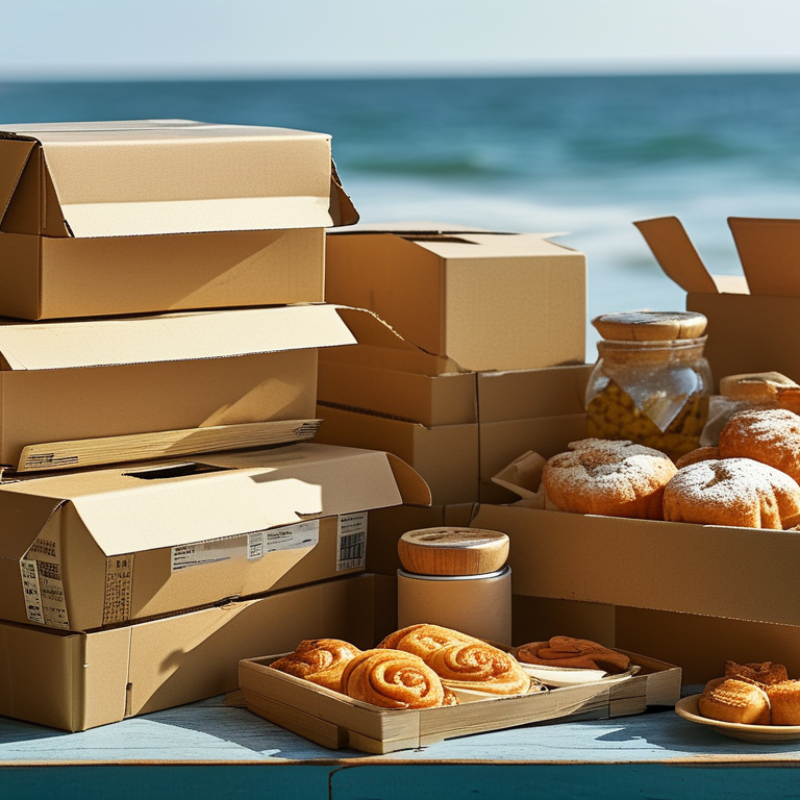
Define Product, Destination, and Shipping Requirements
Define the product before choosing the box. Fresh produce needs ventilation, while frozen food needs insulation and temperature control. Glass jars need partitions and impact protection. Powders need a sealed inner liner. Measure the product, including headspace, liquid content, and final packed weight. Do not guess. FAO’s food loss data estimates that 13.2% of food is lost between harvest and retail globally. A suitable box cannot prevent every loss, but it can reduce bruising, leakage, and temperature exposure.
Destination changes the box specification. A humid port, cold inland route, and hot customs delay create different risks. UNCTAD’s Review of Maritime Transport 2023 reports that ships carry over 80% of global trade by volume. Long sea routes therefore require stronger moisture resistance and reliable stacking strength. Check the destination’s climate, handling conditions, delivery distance, and labeling requirements. Test the box after refrigeration, compression, and vibration. Laboratory results help, but real routes are less polite.
Shipping requirements determine the final design. Specify the carrier’s weight limits, pallet pattern, delivery speed, and expected transfers. Use a double-wall structure for heavy products or repeated handling. Add absorbent material when leakage could damage nearby cartons. Keep internal movement minimal. My first packaging draft is often too confident. A box that survives a warehouse drop may still fail after ten days in humid transit. Record test results, inspect damaged samples, and revise the design before scaling production.
Select Food-Safe Materials for International Transport
How to Choose Food Boxes for Global Shipping?
Global shipping exposes food boxes to humidity, vibration, compression, and sudden temperature changes. Material safety must come before appearance. Choose food-contact paperboard, corrugated fiber, or approved plastic with documented migration testing. The packaging should not transfer odors, inks, adhesives, or harmful substances into food. Condensation is ruthless.
For dry foods, use strong corrugated board with a clean, moisture-resistant inner layer. For chilled products, select materials that remain stable during refrigerated transport. Aluminum or food-grade plastic liners can protect against oxygen and moisture. Recycled content may be useful, but it needs verified food-contact compliance. A green claim alone proves little. Check supplier declarations, batch records, and independent laboratory reports.
The FAO’s The State of Food and Agriculture 2019 estimated that 14% of food is lost between harvest and retail. Better packaging cannot solve every loss, but it can reduce crushing, leakage, and exposure. The UNEP Food Waste Index Report 2024 estimated 1.05 billion tonnes of food were wasted in 2022. That figure makes small packaging decisions feel less small. Test filled boxes under realistic humidity and stacking conditions. ISTA transport testing can reveal weak corners and poor closures. Do not guess. A box may survive a drop test and still fail after three weeks at sea. Review the design after each shipment, especially when cartons arrive soft, swollen, or oddly scented.
Match Box Design to Protection, Insulation, and Space Needs
Choosing a food box for global shipping starts with the product’s weakest point.
Soft fruit needs crush resistance, while frozen seafood needs stable insulation and leak control. A double-wall corrugated box can improve stacking strength, but extra board also increases volume and freight cost. Measure the packed product, not the empty box.
Temperature planning deserves equal attention. The FAO estimates that 14% of food is lost between harvest and wholesale, often because handling and storage fail. For chilled goods, use an insulated liner with enough coolant for the actual route duration. Include airport delays, weekend storage, and customs inspections. A box that survives a 24-hour trip may fail after 48 hours. That assumption is easy to miss. The UNEP Food Waste Index Report 2024 estimated 1.05 billion tonnes of food waste in 2022, so small packaging decisions have serious operational consequences.
Tips:
- Leave minimal empty space, but do not compress fragile items.
- Test the box through vibration, drop, compression, and temperature cycles.
- Record internal temperature with a data logger when cargo is sensitive.
- Review the results with a packaging engineer or certified testing laboratory.
- Recyclability matters, yet a thinner box that damages food is not automatically the better choice.
- I would also test one real shipment, because laboratory success can hide awkward loading, wet docks, or poor manual handling.
Check Regulations, Labels, and Customs Requirements
Choosing food boxes for global shipping begins with the destination country’s rules, not the box supplier. Requirements may differ for ingredients, allergens, language, net quantity, origin, lot codes, and date formats. A label that works in one market may fail inspection elsewhere. Check the importing authority’s current guidance before printing thousands of units.
Customs documents must match the physical shipment. Use the correct HS code, commercial invoice, packing list, country of origin, and food descriptions. Avoid vague wording such as “snacks” or “mixed goods.” Customs officers need precise details. The World Trade Organization estimated that full Trade Facilitation Agreement implementation could reduce global trade costs by 14.3% (WTO, 2015). Clear paperwork helps capture that efficiency.
Box design must also tolerate uncertainty. Maritime transport carries over 80% of global merchandise trade by volume (UNCTAD, Review of Maritime Transport 2023), so packages may face long port delays, humidity, stacking pressure, and temperature changes. Select food-contact materials with supporting compliance documents. Add visible handling and storage instructions. FAO reported that 14% of food is lost between harvest and retail (The State of Food and Agriculture 2019). Packaging cannot solve every loss, but weak seals and unreadable labels make it worse. I would test a small shipment first. Real routes often expose assumptions that laboratory checks miss.
Compare Costs, Sustainability, and Supplier Reliability
Choosing food boxes for global shipping requires more than comparing unit prices. A cheaper box may increase freight costs if it is oversized or difficult to stack. Measure the packed product, including insulation, labels, and protective inserts. Then compare cost per delivered box, not cost per empty box. Small savings can disappear through crushed corners, moisture damage, or extra warehouse space. Keep it practical.
Sustainability also needs careful testing. Recyclable fiber boxes can perform well, but humidity may weaken them during ocean transport. Reusable plastic options may last longer, yet their weight can raise fuel-related shipping costs. Ask for material details, recycled content, and disposal guidance for each destination. A lighter design is not automatically greener. That assumption deserves review. Run a realistic trial with cold packs, condensation, and rough handling before making a large purchase.
Supplier reliability affects every calculation. Request samples from the same production site that will manufacture the final order. Check compression strength, food-contact documentation, printing consistency, and carton dimensions. Ask how the supplier handles raw-material shortages and urgent replacements. Reliable suppliers share clear lead times and communicate changes early. During one packaging trial, a box passed a warehouse test but failed after several days in damp conditions. That result changed the specification and showed why laboratory figures alone are insufficient. Build in inspection points, maintain a backup source, and record performance by shipment.