Why Choose Magnesium Metal Powder for Your Next Project?
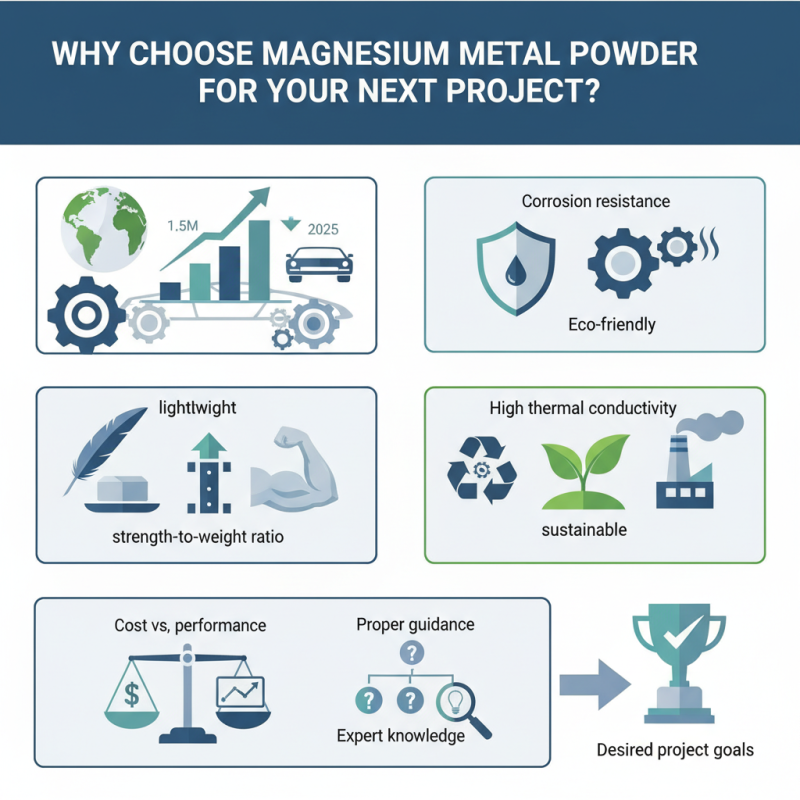
When it comes to project materials, Magnesium Metal Powder stands out for many reasons. According to a recent report by MarketsandMarkets, the global demand for magnesium metal is projected to reach 1.5 million metric tons by 2025. This highlights its critical role in various industries, such as automotive and aerospace. Magnesium Metal Powder is not only lightweight but also exhibits excellent strength-to-weight ratios.
Furthermore, its ability to resist corrosion and high thermal conductivity makes it a preferred choice in manufacturing processes. Moreover, the eco-friendly aspect of magnesium makes it an appealing option. As the demand for sustainable materials grows, Magnesium Metal Powder presents an effective solution. However, some projects may not fully leverage its properties, leading to underperformance.
It's crucial to consider the specific requirements of your project when choosing materials. Balancing cost with performance is essential. Proper guidance and expert knowledge can help in making the right selection of Magnesium Metal Powder, ensuring that your project achieves its desired goals.
Benefits of Using Magnesium Metal Powder in Industrial Applications
Magnesium metal powder is gaining popularity in industrial applications due to its unique properties and benefits. It is lightweight yet strong, making it ideal for aerospace and automotive industries. According to a report by the International Magnesium Association, magnesium allows for weight reduction up to 30% compared to aluminum.
In addition to its strength-to-weight ratio, magnesium metal powder is highly reactive. Its fast combustion properties make it useful in pyrotechnics and fireworks, creating vibrant effects. However, handling magnesium requires care. The powder can ignite easily when exposed to sparks or flames.
Tip: Always store magnesium powder in a cool, dry place, away from any ignition sources.
Another key advantage is magnesium's ability to provide excellent thermal conductivity. This property is particularly valuable in electronics, where heat dissipation is critical. However, manufacturers must remain vigilant. Poor quality control can lead to inconsistent powder characteristics, affecting performance in applications.
Tip: Regularly test the quality of magnesium powder to ensure reliability in your projects.
Overall, the versatility of magnesium metal powder offers great potential. Industries are continuously exploring new applications to leverage its benefits, balancing innovation with safe handling practices.
Key Properties Making Magnesium Metal Powder Ideal for Various Projects
Magnesium metal powder stands out due to its unique properties. It is lightweight yet strong, making it an ideal choice for various applications. This metal offers excellent corrosion resistance, a crucial factor in industries like automotive and aerospace. Specialists find that its low density enhances fuel efficiency by reducing overall weight in vehicles.
Moreover, magnesium powder has remarkable thermal and electrical conductivity. This makes it useful in electronics and heat management systems. The material’s reactivity can be both an advantage and a challenge. When managed properly, this characteristic allows for effective combustion in various applications. However, it requires skilled handling to prevent unintended reactions.
Finding the right use for magnesium powder can be complex. Each project presents unique challenges and demands expertise. Understanding the properties of magnesium is essential for successful implementation. Each application may need a different approach to maximize the benefits of this versatile metal. Balancing its benefits with the necessary precautions is key for any engineer or project manager.
Market Trends and Demand for Magnesium Metal Powder in Manufacturing
Magnesium metal powder has seen a surge in demand across various manufacturing sectors. In recent years, global consumption has increased by approximately 5% annually. This rise is driven by its lightweight properties and excellent corrosion resistance. The automotive industry is a significant contributor, focusing on lightweight components that enhance fuel efficiency.
Market analysts project that the demand for magnesium metal powder will continue to grow, especially in aerospace and electronics. The projected CAGR for the magnesium powder market is expected to exceed 7% from 2023 to 2030. This shift highlights the importance of innovation in reducing material weight without compromising quality.
Tips: Consider the purity and particle size of the magnesium powder for specific applications. Smaller particles provide better reactivity but may require careful handling. Always refer to safety data sheets to ensure proper use in your projects. Regularly reassess supplier options; the market is evolving, and new providers may offer better quality or pricing.
Market Trends and Demand for Magnesium Metal Powder in Manufacturing
| Year | Global Demand (Metric Tons) | Market Growth Rate (%) | Main Application Sector | Price per Metric Ton (USD) |
| 2020 | 150,000 | 5.4 | Automotive | 2,500 |
| 2021 | 160,000 | 6.0 | Aerospace | 2,550 |
| 2022 | 170,000 | 7.5 | Electronics | 2,600 |
| 2023 | 180,000 | 8.2 | Construction | 2,700 |
Comparative Analysis: Magnesium vs. Other Metal Powders in Applications
When considering metal powders, magnesium stands out for its unique properties. The material density of magnesium powder is about 1.74 g/cm³, significantly lighter than aluminum, which has a density of approximately 2.7 g/cm³. This difference allows magnesium to be a superior choice for applications where reducing weight is critical, such as in aerospace and automotive industries.
Thermal conductivity is another key factor. Magnesium powder exhibits a thermal conductivity of 156 W/m·K, which surpasses that of many other metal powders. This characteristic is essential in applications requiring efficient heat dissipation, like electronic components. However, safety considerations exist with magnesium. Its reactivity can lead to challenges during processing.
In comparison to titanium and zinc powders, magnesium offers a competitive advantage. Titanium is heavier and more expensive, while zinc lacks magnesium's corrosion resistance in specific environments. Evaluating the specific requirements of projects will reveal the right choice, taking into account both advantages and limitations. Understanding these factors ensures informed decision-making.
Safety and Environmental Considerations in Handling Magnesium Metal Powder
Magnesium metal powder has unique properties, but it also presents safety and environmental challenges. When handling this material, proper precautions must be taken. This is crucial for safe operations in various applications. Magnesium powder is highly reactive, especially in the presence of moisture. A dust cloud can ignite easily, leading to serious fires or explosions. Workers should wear protective gear and ensure proper ventilation.
Environmental considerations are equally important. Magnesium production involves energy-intensive processes. The extraction and processing can lead to emissions and waste. It's vital to minimize such impacts by using efficient methods and practices. Recycling magnesium powder can also significantly reduce environmental footprints. This process conserves resources and lowers energy use.
Moreover, training employees on safe handling practices is essential. They must understand the risks and learn emergency procedures. Regular safety audits help identify gaps in knowledge. When handling magnesium powder, organizations must tread carefully. Balancing effectiveness and safety can be challenging. Reflection on past incidents can improve future practices.