
Demand for brightening skincare continues to influence ingredient procurement. Cosmetics Europe reported that Europe’s cosmetics and personal care market reached €104 billion in retail sales during 2023. However, major market reports rarely separate natural alpha arbutin from synthetic arbutin. That limitation matters when evaluating supplier claims.
Natural Alpha Arbutin Powder should be purchased through evidence, not attractive product language. Request the botanical source, extraction method, assay percentage, and complete batch documentation. A reliable supplier should provide a recent certificate of analysis, HPLC results, microbiological testing, heavy-metal limits, and residual-solvent data. Check the manufacturing date. Check the storage temperature. Small details matter.
Perry Romanowski, a cosmetic chemist and educator, offers a useful principle: “The supplier is part of your formulation.” His point is practical. Supplier consistency affects color, solubility, stability, and final product performance. Grand View Research valued the global skincare products market at approximately USD 155.7 billion in 2022, with continued growth projected through 2030. That growth can encourage rushed purchasing and exaggerated “natural” claims.
Do not assume “natural” means superior.
Compare at least three suppliers. Evaluate MOQ, lead time, packaging, sample quality, and technical support. Ask whether the powder is suitable for your intended formulation and concentration. Stability testing remains essential, even when laboratory documents look complete. I would still hesitate before accepting a low price without traceability. A cheaper batch may create reformulation costs later. The buying decision should balance purity, documentation, formulation performance, and dependable delivery.
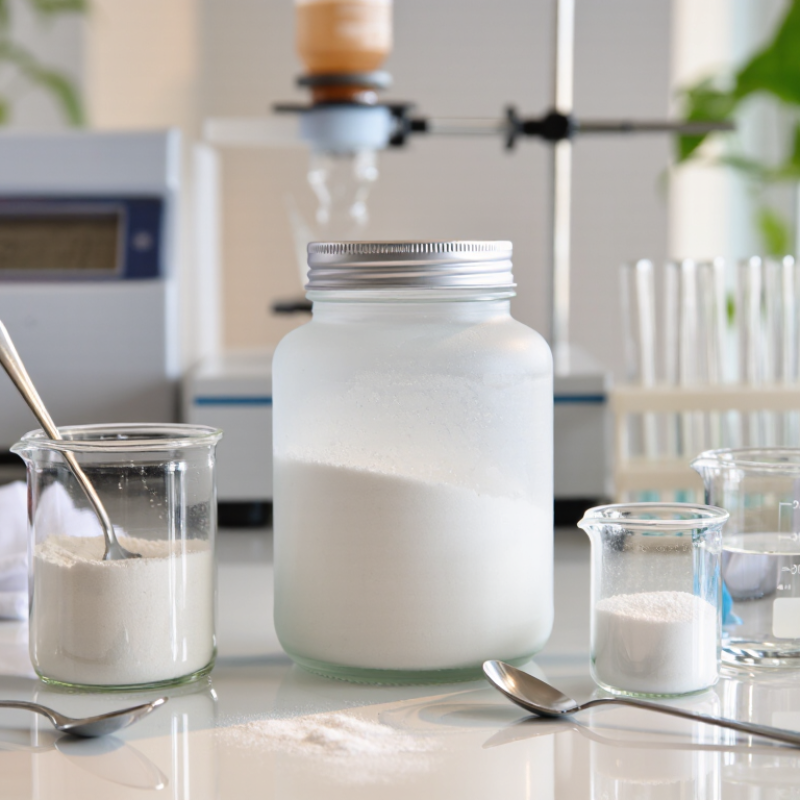
How to Buy Natural Alpha Arbutin Powder in Bulk?
What Is Natural Alpha Arbutin Powder and Who Uses It?
Natural alpha arbutin powder is a cosmetic ingredient used in skin-brightening formulations. It is associated with bearberry and other plant sources, but “natural” is not always a precise description. Some materials use controlled biosynthesis instead of direct plant extraction. Ask for the exact origin.
Professional skincare formulators, cosmetic manufacturers, research laboratories, and private-label producers commonly use it. They add it to serums, creams, lotions, and targeted spot-care products. The ingredient should be dissolved carefully and protected from excessive heat, light, and moisture. Poor handling can affect color, stability, and performance.
Bulk buyers should request a current certificate of analysis before ordering. Check the alpha-arbutin assay, identification method, moisture level, microbiological results, heavy metals, and residual solvents. HPLC testing gives stronger identity evidence than a simple appearance check. Packaging also matters. Sealed, light-resistant containers help preserve the powder during storage and transport.
Do not trust the word “natural” alone.
A practical mistake is comparing prices before comparing specifications. A cheaper powder may have unclear botanical traceability or weak stability data. I would also review batch numbers, shelf life, storage instructions, and regulatory documents for the intended market. Final use levels should follow qualified formulation guidance and applicable cosmetic rules. Bulk powder is not suitable for casual, undiluted home application.
How to Buy Natural Alpha Arbutin Powder in Bulk?
How to Define Your Bulk Purchasing Requirements
Bulk purchasing should begin with a written specification, not a supplier quotation. Define the botanical source, plant part, extraction method, alpha-arbutin assay, appearance, particle size, moisture, and residual solvents. “Natural” needs evidence. Request the botanical name, country of origin, batch traceability, and a manufacturing flow chart.
Set realistic quality limits before discussing price. A practical specification may require an assay above 98%, although the final target should match your formulation and testing capability. Request certificates of analysis, chromatograms, heavy-metal results, and microbiological data for every batch. The European Commission’s Scientific Committee on Consumer Safety evaluated alpha-arbutin exposure and supported maximum use levels of 2% in face creams and 0.5% in body lotions. This makes formulation concentration a key purchasing detail, not a later decision.
Ask for three samples from separate production batches. Test identity and purity through an independent laboratory. Confirm stability after heat, humidity, and light exposure. ISO 22716 guidance also emphasizes documented production, hygiene, storage, and traceability controls. Packaging should protect the powder from moisture, preferably with sealed inner liners and batch labels. Specify the annual volume, trial quantity, delivery schedule, and acceptable lead time. Price alone misleads.
One detail is easy to miss: define the allowed level of hydroquinone-related impurities. Alpha-arbutin can degrade under unsuitable conditions. I would also include retest dates and a rejected-batch procedure. That feels cautious, but incomplete specifications create expensive surprises.
| Requirement Dimension | Recommended Bulk Requirement | Reference Data or Acceptance Criteria | Why It Matters |
|---|---|---|---|
| Ingredient identity | Alpha-Arbutin powder | Chemical name: 4-Hydroxyphenyl α-D-glucopyranoside; CAS Registry Number: 84380-01-8 | Prevents substitution with beta-arbutin or another whitening ingredient. |
| Molecular information | Confirm against the supplier specification | Molecular formula: C12H16O7; molecular weight: 272.25 g/mol | Supports identity verification and analytical testing. |
| Purity | Set a minimum assay before requesting quotations | A common cosmetic-grade target is ≥99.0% by HPLC; the method and calculation basis must be stated. | Ensures consistent formulation performance and allows price comparisons on the same basis. |
| Appearance | White to off-white crystalline powder | Free-flowing material with no visible foreign matter, abnormal odor, or excessive agglomeration. | Provides a fast incoming-quality check before laboratory release. |
| Solubility and handling | Require the supplier’s test method and temperature | Alpha-arbutin is water-soluble; the reported solubility value should specify concentration, temperature, and test conditions. | Helps predict dissolution time and manufacturing behavior. |
| Moisture or loss on drying | Define a maximum limit in the purchase specification | Use a validated method, such as loss on drying or Karl Fischer; do not compare results without matching methods. | Moisture can affect stability, powder flow, and batch weight. |
| Microbiological quality | Set limits according to the finished product and applicable market rules | Request total aerobic microbial count, yeast and mold count, and specified pathogen results, with methods and limits stated. | Reduces contamination risk during storage and production. |
| Heavy metals and contaminants | Include a compliance statement and laboratory results | Request lead, arsenic, mercury, cadmium, residual solvents, and pesticide results where relevant to the intended market. | Supports regulatory review and raw-material risk assessment. |
| Documentation package | Require documents before placing the purchase order | Certificate of Analysis, Safety Data Sheet, specification sheet, allergen statement, origin statement, and batch traceability records. | Makes technical qualification, import clearance, and audits easier. |
| Order quantity | Prepare several volume tiers for quotation | Example tiers: 1 kg for evaluation, 5 kg for pilot production, 25 kg for a standard bulk lot, and 100 kg or more for scheduled supply. | Reveals price breaks, freight effects, and inventory requirements. |
| Packaging | Use sealed, moisture-protective, food- or cosmetic-compatible packaging | Confirm inner liner, outer container, net weight, tamper evidence, and whether smaller units are available for controlled dispensing. | Protects the powder from moisture, contamination, and repeated handling. |
| Shelf life and storage | Specify minimum remaining shelf life at delivery | Request expiry or retest date, recommended storage conditions, and stability data. Store in a tightly closed container in a cool, dry place away from direct light. | Reduces degradation and limits write-offs from short-dated inventory. |
| Batch consistency | Request a retained sample and batch-to-batch comparison | Compare identity, assay, appearance, moisture, particle characteristics, and microbiological results across representative batches. | Helps maintain uniform color, texture, and active content in finished products. |
| Pre-shipment approval | Make shipment conditional on document and sample approval | Approve the final specification, packaging artwork or labels, batch documents, quantity, and shipping conditions before dispatch. | Prevents avoidable receiving disputes and nonconforming deliveries. |
Note: Acceptance limits should be finalized according to the intended cosmetic application, destination-market regulations, validated test methods, and the buyer’s quality system.
Natural origin must be verified, not assumed from a green label. Alpha-arbutin and beta-arbutin are different molecules. Ask suppliers to identify the exact form, source, and manufacturing route. A botanical name alone proves little.
Request batch-specific certificates, including HPLC purity, moisture, residual solvents, heavy metals, microbiological limits, and optical data. A credible laboratory should issue test results with methods, detection limits, and sample numbers.
ISO 16128-1 provides guidance for calculating natural-origin content, but it is not a certification system. Read the calculation carefully. “Natural-origin” may include chemically processed ingredients. For a stronger review, compare the supplier’s declaration with the technical dossier and certificate of analysis. Eurofins’ 2024 cosmetics testing guidance also stresses traceability and validated analytical methods. Ask for an independent retest before accepting a large shipment. Small details matter.
Quality control should continue after delivery. Keep a sealed retention sample, inspect the powder’s color and odor, and record storage temperature. Alpha-arbutin should remain protected from humidity and excessive heat. ISO 22716:2007 offers practical GMP guidance for cosmetic raw materials and production controls.
Cosmetics Europe reported European cosmetics and personal care sales of about €104 billion in 2023, showing the scale of this supply chain. Scale can hide weak documentation. I have seen paperwork look complete while the batch identity remained unclear. That is uncomfortable, but it deserves attention. Bulk purchasing should reward evidence, not confident wording.
Buying natural alpha arbutin powder requires more than comparing online quotations. An experienced buyer should examine the supplier’s production controls, traceability, and communication quality. Ask for a recent Certificate of Analysis for the exact batch offered. It should show assay, moisture, appearance, microbiological limits, and heavy metal results. HPLC testing is especially useful for confirming identity and purity.
Request the SDS, technical data sheet, specification sheet, and origin statement. Check whether the documents carry matching batch numbers, test dates, and supplier details. A reliable supplier should provide a retained sample and explain storage conditions, such as protection from heat, moisture, and direct light. I have found that vague documents often create delays later. Still, paperwork alone cannot prove consistent quality. An independent laboratory test may be worthwhile before a large purchase.
Tips: Compare landed cost, not only the quoted kilogram price. Include testing, shipping, customs handling, packaging, and possible storage losses. Ask about minimum order quantity, production lead time, payment terms, and replacement procedures for failed batches. Extremely low pricing deserves careful review. It may reflect weaker documentation, older stock, or a different purity grade. Request a small trial order before committing to volume. That step feels slower. It can prevent an expensive mistake.
A bulk order needs more than a low price. Grand View Research estimated the global skincare market at USD 155.7 billion in 2023, with continued growth through 2030. That growth increases pressure on ingredient quality and delivery speed.
Request a current specification sheet, certificate of analysis, safety data sheet, and botanical source statement before placing an order. Confirm alpha arbutin content, moisture, particle size, residual solvents, heavy metals, and microbial limits. Ask for batch numbers and test methods. A vague certificate is a warning sign.
Keep the purchase order precise. State the required grade, net weight, packaging format, production date, expiry period, sampling plan, and acceptable test variation.
For inspection, compare the delivered drum labels with the documents. Check the inner liner for damage, powder color, odor, clumping, and foreign particles. Send representative samples to an independent laboratory when the order is large.
ISO 22716 guidance supports documented production and quality controls, but it does not replace your own verification. That mistake is common.
Store the powder in a cool, dry, dark area. Use sealed, food-contact-suitable containers when appropriate, and keep them away from sunlight, heat, moisture, and strong odors. Record opening dates and stock movement. First in, first out works well.
It is not perfect. Humidity changes, delayed testing, or weak pallet wrapping can still cause problems. Grand View Research’s 2024 analysis also shows how quickly skincare demand is expanding, making disciplined inventory control increasingly important.
| Cookie | Duration | Description |
|---|---|---|
| cookielawinfo-checkbox-analytics | 11 months | This cookie is set by GDPR Cookie Consent plugin. The cookie is used to store the user consent for the cookies in the category "Analytics". |
| cookielawinfo-checkbox-functional | 11 months | The cookie is set by GDPR cookie consent to record the user consent for the cookies in the category "Functional". |
| cookielawinfo-checkbox-necessary | 11 months | This cookie is set by GDPR Cookie Consent plugin. The cookies is used to store the user consent for the cookies in the category "Necessary". |
| cookielawinfo-checkbox-others | 11 months | This cookie is set by GDPR Cookie Consent plugin. The cookie is used to store the user consent for the cookies in the category "Other. |
| cookielawinfo-checkbox-performance | 11 months | This cookie is set by GDPR Cookie Consent plugin. The cookie is used to store the user consent for the cookies in the category "Performance". |
| viewed_cookie_policy | 11 months | The cookie is set by the GDPR Cookie Consent plugin and is used to store whether or not user has consented to the use of cookies. It does not store any personal data. |
