The 2026 market for aluminum beer bottles is becoming more specialized. Global buyers now compare bottle shape, wall strength, closure design, decoration, and recycling performance. A bottle may look premium on a showroom shelf, yet fail during filling, transport, or cold storage.
This guide examines the main aluminum beer bottles types for international purchasing teams. It considers standard long-neck bottles, sleek formats, wide-mouth designs, and custom-shaped options. Each type serves a different purpose. A lightweight bottle can reduce material use, but it may require tighter handling controls. A deeply embossed design can strengthen brand identity, but it may increase tooling costs and production time.
John A. Hayes, former chief executive of Ball Corporation, said, “Aluminum is infinitely recyclable.” That principle remains important, but it needs practical verification. Recycling value depends on collection systems, sorting quality, coatings, and local infrastructure. Buyers should request technical data, food-contact documentation, closure compatibility results, and transport testing before placing large orders. Supplier claims deserve careful review.
Small details matter. A dent near the shoulder can affect shelf appeal. A poorly matched cap can cause leakage. A shiny finish may reveal fingerprints in retail lighting. These issues are easy to overlook. Not every bottle suits every filling line. That assumption can become expensive. This overview offers a clearer way to compare aluminum beer bottles, balance appearance with performance, and select formats that support reliable global distribution. Some choices will remain imperfect. That is normal. The better decision is the one supported by testing, traceable evidence, and realistic supply planning.
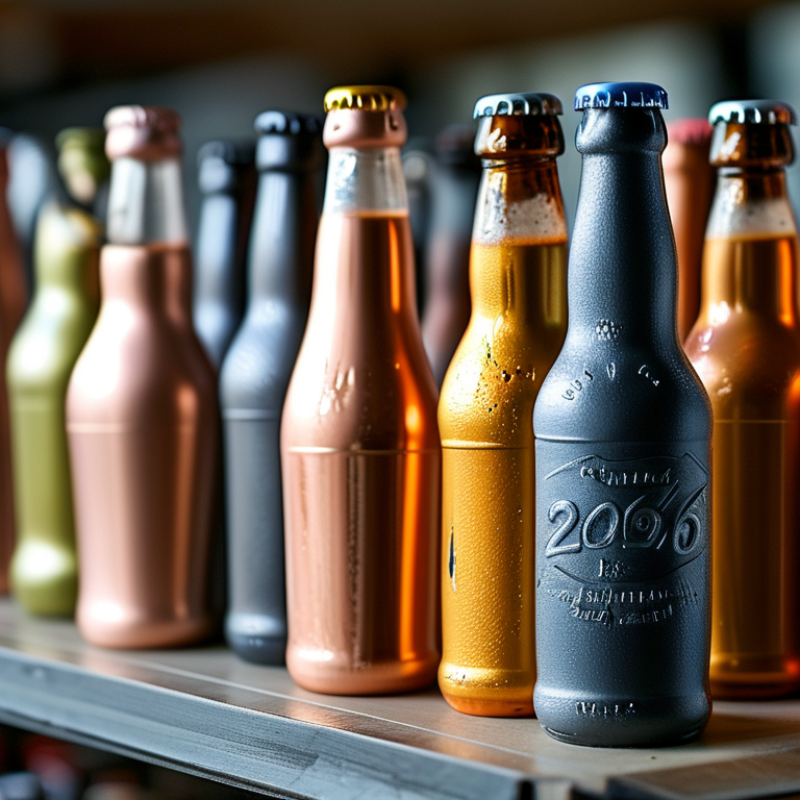
Aluminum beer bottles combine a rigid metal body with a familiar bottle shape. They are light, stackable, and resistant to breakage during transport. Their opaque walls also protect beer from light exposure, which can affect flavor. High thermal conductivity allows fast chilling, although the bottle can warm quickly after opening.
A quality bottle needs accurate neck dimensions, strong seams, and a suitable internal coating. The coating separates beer from aluminum and helps preserve taste. Closure design also matters. It should open cleanly and reduce leakage during distribution. The International Aluminium Institute reports that recycling aluminum can save up to 95% of the energy required for primary production. However, recyclability depends on collection systems, coatings, and local processing capacity. A recyclable design is not automatically recycled. That distinction is often overlooked.
Tips: Ask suppliers for migration-test records, coating specifications, wall-thickness data, and drop-test results. Check whether the bottle fits standard filling equipment. The U.S. Environmental Protection Agency’s latest materials data reports a 45.2% recycling rate for aluminum beverage cans, showing that recovery remains incomplete. Buyers should avoid treating can data as direct bottle data. More bottle-specific evidence is still needed.
Aluminum beer bottles in 2026 mainly fall into four practical types. Standard single-wall bottles offer low weight, strong impact resistance, and efficient transport. They suit outdoor events, retail multipacks, and high-volume filling lines. Their metal surface blocks light, which helps protect beer quality during storage. However, the bottle can feel warm quickly without added insulation.
Double-wall insulated bottles provide better temperature retention for premium or extended-use products. They usually have thicker construction and higher production costs. Contoured bottles add a shaped grip around the shoulder or body. This design improves handling and creates stronger shelf recognition without using a brand name. Necked-in models use a narrower upper section, which supports familiar pouring and closure designs.
Reusable aluminum bottles with screw caps are also gaining attention among global buyers. They work well for controlled refill systems, but cap sealing requires careful testing. A small leak can damage cartons during long-distance shipping. Printed, embossed, and matte-finish surfaces offer different visual and tactile effects. Yet, attractive finishes may increase processing steps or complicate material recovery. The most elegant prototype is not always the easiest to fill. Buyers should compare wall thickness, closure performance, pallet efficiency, and recycling conditions in the target market. Regional infrastructure still differs, so one bottle type cannot perform equally everywhere.
2026 Top Aluminum Beer Bottle Types for Global Buyers
Choosing bottle shapes, sizes, and closure systems requires more than visual appeal. Straight-wall aluminum bottles suit high-speed filling and efficient pallet stacking. Tapered shapes offer stronger shelf presence, but they can reduce packing efficiency. Stubby formats feel stable in the hand. They also need careful label positioning. Common sizes include 250 ml, 330 ml, and 500 ml. The right choice depends on serving occasion, filling equipment, and shipping distance. In pilot runs, a 330 ml bottle often balances portability and line speed. However, this is not universal.
Closure selection affects freshness, opening feel, and production risk. Threaded screw closures support resealing and easy export handling. Crown-style closures can deliver a familiar beer experience, but they require precise neck dimensions and capping pressure. Buyers should test liner materials against carbonation, acidity, and storage temperatures. International Aluminium Institute data indicates that recycled aluminum can save up to 95% of the energy used for primary aluminum production. That advantage matters, but a poorly designed closure may increase material use and reject rates. Sustainability claims need factory evidence.
Tips: Request torque, leakage, and pressure-test results before approval. Compare empty-bottle weight, not only appearance. Check whether the bottle runs on your existing filler. Small neck variations can create expensive delays. Do not assume a premium shape sells better. Shelf tests may prove otherwise. Also review pallet stability under humid, long-distance conditions. A design can look excellent in a sample room and still fail during transport.
| Aluminum Bottle Type | Typical Nominal Capacity | Approx. Overall Size (Height × Body Diameter) |
Typical Empty Weight | Common Shape and Use | Recommended Closure Systems | Typical Filling and Distribution Applications | Buyer Selection Considerations |
|---|---|---|---|---|---|---|---|
| Slim Standard Bottle | 250–330 mL | 190–235 mm × 53–58 mm | 25–38 g | Tall, narrow body with a conventional beer-bottle profile. Suitable for premium single-serve portions and controlled-volume products. |
28 mm ROPP screw cap Crown-style closure where the bottle neck is specifically designed for it |
Cans-and-bottles retail multipacks, hospitality service, event packaging, and premium beer portions. | Check neck compatibility with the filling line, capper, pressure rating, and secondary-pack dimensions. |
| Standard Long-Neck Bottle | 330–355 mL | 230–255 mm × 58–62 mm | 30–45 g | Familiar long-neck silhouette that provides a strong balance between shelf presence, grip, and efficient case packing. |
28 mm ROPP screw cap Crown-style closure on compatible neck finishes |
Mainstream and craft beer, export cases, convenience retail, restaurants, and bars. | A practical global format, but exact bottle height and shoulder profile should be matched to cartons, trays, and pallet patterns. |
| Short and Wide Bottle | 330–500 mL | 155–220 mm × 65–78 mm | 35–55 g | Broad body with a lower center of gravity. Offers a larger decoration area and a substantial hand feel. |
28 mm ROPP screw cap Wide-mouth screw closure for selected designs |
Premium beer, specialty releases, gift packs, food-service applications, and products requiring a large label or printed panel. | Confirm gripper clearance, depalletizer settings, case count, and the stability of the bottle during high-speed conveying. |
| Classic Amber-Style Bottle | 330–500 mL | 200–265 mm × 60–72 mm | 32–52 g | Rounded shoulder and traditional beer-bottle appearance while retaining aluminum's low weight and impact resistance. |
28 mm ROPP screw cap Crown-style closure on a compatible finish |
Traditional lager, ale, seasonal beer, export programs, and premium retail positioning. | Aluminum itself is opaque and protects beer from light; interior coating, oxygen control, and closure sealing remain essential. |
| Large-Format Sharing Bottle | 500–750 mL | 245–315 mm × 68–82 mm | 48–75 g | Extended body designed for sharing occasions, table service, and higher-volume consumption. |
28 mm ROPP screw cap Larger screw finish where specified by the filling system |
Hospitality, restaurants, special releases, family-size retail, and premium gift packaging. | Evaluate top-load strength, neck stability, carton dividers, pallet height, and full-bottle transport performance. |
| Stubby Premium Bottle | 250–355 mL | 145–205 mm × 64–76 mm | 28–48 g | Compact, rounded profile with a strong visual presence and a stable base. Useful where shelf differentiation is more important than maximum case density. |
28 mm ROPP screw cap Specialty screw or crown-style closure when technically compatible |
Craft beer, tasting portions, hospitality service, promotional packs, and limited editions. | Larger diameter can reduce the number of units per case and may require dedicated star wheels, guides, and tray tooling. |
| Shaped or Contoured Bottle | 330–500 mL | 190–265 mm × 60–82 mm | 35–65 g | Custom waist, shoulder, or asymmetric profile for tactile differentiation and stronger shelf recognition. |
28 mm ROPP screw cap Custom neck finish only when supported by the capper and closure supplier |
Premium positioning, contract-packaged products, tourism channels, and brand-led specialty beer programs. | Requires early validation of tooling, label application, conveying, case packing, pressure resistance, and minimum order quantities. |
| Wide-Mouth Functional Bottle | 330–500 mL | 175–245 mm × 68–82 mm | 38–65 g | Wider opening and reinforced neck intended for easy drinking, refilling, or integration with a functional cap. |
38 mm screw closure Sports or tethered closure when designed for the application |
Outdoor events, active-lifestyle channels, specialty beverages, and selected beer formats with non-traditional consumption occasions. | Verify oxygen ingress, carbonation retention, tamper evidence, drinking comfort, and compatibility with pasteurization or cold-chain use. |
| Travel and Event Bottle | 250–500 mL | 160–250 mm × 55–75 mm | 28–58 g | Lightweight, durable format for concerts, festivals, outdoor venues, travel retail, and controlled-service environments. |
Tamper-evident screw cap 28 mm ROPP finish is commonly selected for beer applications |
Events, stadiums, leisure venues, travel retail, and areas where breakage reduction is important. | Confirm venue rules, cap-retention requirements, deposit or recycling regulations, and resistance to dents during handling. |
| Decorated Premium Bottle | 330–500 mL | 190–265 mm × 58–78 mm | 32–60 g | Standard or shaped bottle optimized for direct printing, sleeves, or high-coverage decoration. |
28 mm ROPP screw cap Closure color and finish selected to match the decoration system |
Premium retail, seasonal products, gift boxes, export launches, and short-run promotional programs. | Confirm ink adhesion, scuff resistance, color consistency, decoration lead time, and recycling requirements for labels or sleeves. |
| Technical note: Dimensions and empty weights are typical planning ranges for commercially produced aluminum beverage bottles, not universal specifications. Final values vary with alloy, wall thickness, neck finish, internal coating, bottle geometry, decoration, and required carbonation pressure. For international procurement, buyers should request approved drawings, neck-finish specifications, closure torque ranges, pressure-test results, oxygen-transmission data, food-contact compliance documents, and samples for line trials before confirming production. | |||||||
Global buyers can choose aluminum beer bottles made from primary metal, recycled aluminum, or a controlled blend. Primary aluminum offers consistent strength and appearance. Recycled content can reduce energy demand, but its supply varies by region. Higher recycled content may also change surface quality or forming performance. This requires practical testing.
Coatings protect beer from light, oxygen, and metal contact. Internal liners should resist acidity, carbonation, and pasteurization temperatures. External coatings must survive filling lines, transport, and cold storage without peeling. Water-based or powder coatings may reduce certain emissions, but their full impact depends on curing energy and factory controls. Ask for migration testing and food-contact compliance documents for each destination market.
Sustainability goes beyond the bottle itself. Lightweight designs can reduce transport emissions, yet fragile walls may increase damage and waste. Recycled aluminum usually has strong recovery value, but collection systems differ widely between countries. Closures, labels, inks, and coatings also affect recycling efficiency. I would not judge a package by recycled content alone. That can mislead buyers. Compare verified lifecycle data, renewable electricity use, recycled input, and recovery rates. No option is perfect. Procurement teams should test shelf life, filling reliability, and regional recycling conditions before selecting a bottle type.
Global Buying Criteria for Aluminum Beer Bottles
Global buyers should evaluate aluminum beer bottles beyond unit price. The International Aluminium Institute reports that recycling aluminum requires about 95% less energy than producing primary aluminum. This supports lower-impact packaging, but recycled content can affect material consistency. Ask suppliers for alloy specifications, recycled-content records, and batch traceability.
Bottle shape matters. A narrow neck may improve pouring control, while a wider opening can simplify filling and cleaning. Confirm compatibility with existing capping equipment before approving samples. Check wall thickness, internal coating, closure torque, and leak-test results. Practical sourcing audits often reveal small neck or thread deviations. They can stop a full production run. Not glamorous, but expensive.
Request migration and food-contact test documents for the target markets. ISO 9001 certification supports process control, yet it does not prove every bottle is suitable for beer. Independent laboratory testing remains necessary. The European Aluminium industry has reported packaging recycling rates above 70% in several mature collection systems, but local recovery differs sharply. A bottle designed for recycling may still be lost without collection access. Freight planning also deserves attention. Empty aluminum bottles consume space, so pallet efficiency, dent resistance, and protective separators influence the delivered cost. Some suppliers promise aggressive minimum order quantities. That may look attractive, but storage losses and slow-moving inventory can reverse the calculation.
Global Buying Criteria for Aluminum Beer Bottles
The chart compares commonly specified nominal fill volumes for aluminum beer bottles in international beverage packaging. Actual bottle dimensions, neck finishes, closure systems, and transport specifications vary by market and filling equipment.
| Cookie | Duration | Description |
|---|---|---|
| cookielawinfo-checkbox-analytics | 11 months | This cookie is set by GDPR Cookie Consent plugin. The cookie is used to store the user consent for the cookies in the category "Analytics". |
| cookielawinfo-checkbox-functional | 11 months | The cookie is set by GDPR cookie consent to record the user consent for the cookies in the category "Functional". |
| cookielawinfo-checkbox-necessary | 11 months | This cookie is set by GDPR Cookie Consent plugin. The cookies is used to store the user consent for the cookies in the category "Necessary". |
| cookielawinfo-checkbox-others | 11 months | This cookie is set by GDPR Cookie Consent plugin. The cookie is used to store the user consent for the cookies in the category "Other. |
| cookielawinfo-checkbox-performance | 11 months | This cookie is set by GDPR Cookie Consent plugin. The cookie is used to store the user consent for the cookies in the category "Performance". |
| viewed_cookie_policy | 11 months | The cookie is set by the GDPR Cookie Consent plugin and is used to store whether or not user has consented to the use of cookies. It does not store any personal data. |